The LUPD does not run a single, time-bound program called “policy change”; rather, it follows a comprehensive and ongoing rights-based advocacy approach that is, in essence, a permanent and systematic program aimed at transforming public policies in Lebanon. The goal is to shift the relationship with the state from a charity and welfare model to one of rights and full citizenship.
Strategic Objective: Changing the Model
The core objective is to transform how the state and society approach disability:
- From the charity/welfare model, which views persons with disabilities as passive recipients of help or objects of pity.
- To the social/rights model, which views persons with disabilities as full citizens whose barriers must be removed to ensure equal opportunities and active participation in society and decision-making.
Main Components
This ongoing policy change program operates through three interconnected advocacy campaigns:
1. Continuous Advocacy Campaign (Legislative and Administrative Pressure)
This is the umbrella for all advocacy activities and includes:
- Securing implementing decrees: Pressuring relevant ministries to issue the necessary decrees to activate Law 220/2000, particularly regarding accessibility rights, decent work, and inclusive education.
- Strategic litigation: Filing lawsuits against the Lebanese state to compel judicial enforcement of the law, serving as a direct mechanism to change delaying policies.
- Participation in decision-making: Working with parliamentary committees and ministries to shape and amend national policies, such as the national inclusive education policy or the national disability strategy.
2. “Haqqi” Campaign (Focus on Political Rights)
This campaign focuses on changing electoral policies and procedures to ensure:
- Inclusive and independent voting: Pressuring the Ministry of Interior to make polling stations accessible and implement Decree 2214/2009.
- Monitoring and reporting: Deploying hundreds of observers to document violations and push for changes in practices on the ground.
3. “Ammir lil Jami” Campaign (Focus on Inclusive Environment and Access)
This campaign aims to change urban planning and engineering policies in both public and private sectors, including:
- Engineering advocacy: Working with ministries such as Public Works and engineers’ syndicates to mandate inclusive design standards in construction, reconstruction, and public facilities.
- Studies and costing: Producing detailed cost studies for retrofitting buildings and schools, turning them into advocacy tools with decision-makers.
Key Advocacy Mechanisms
To achieve policy change, the LUPD relies on multiple mechanisms:
- Coalitions and partnerships: Forming partnerships with civil society organizations and international bodies to unify pressure on the state and encourage the private sector to apply the law.
- Awareness raising and dispelling misconceptions: Using media and publications to frame disability issues as human rights issues, not medical or charitable ones, thereby shifting public awareness that in turn pressures policies.
- Evidence-based data: Conducting field surveys and documented studies on the reality of disability in Lebanon, using this data as advocacy tools to counter official arguments about implementation difficulties or cost.
Related Content

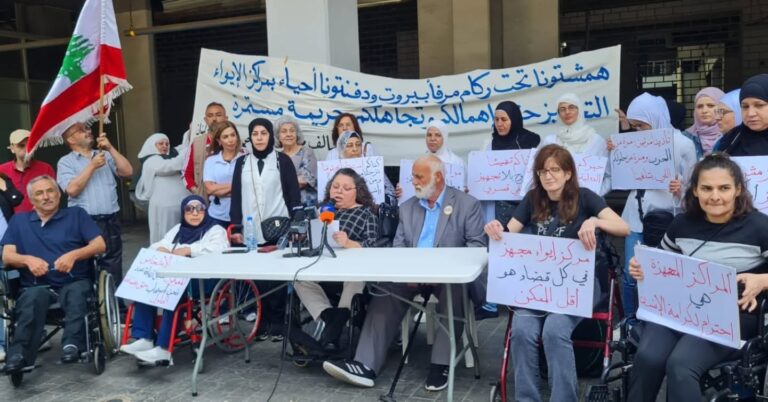
Protest in Front of ESCWA with the Gathering of Residents of Southern Border Towns
22 / 09 / 2026Demands included the withdrawal of the Israeli enemy, the return of prisoners, support for the right of displaced people to return to their towns and villages, extending state authority over them, backing the displaced, and speeding up reconstruction.

Discussion Session on the “Accessible Sidewalk Standard”
18 / 08 / 2026the LUPD organized a discussion session to review the Accessible Sidewalk Standard draft, entitled “Inclusive Guidelines for the Accessibility and Use of the Built Outdoor Environment.”
Rights-based Session at LUPD
21 / 07 / 2026LUPD held a rights-based session titled “Our lives are not less important than the lives of non-disabled people” highlighting the importance of self-advocacy in confronting the continued marginalization of the rights of persons with disabilities during the recovery and reconstruction phase. The session also reflected on the lessons learned from the displacement crisis, during which […]
Interactive Session at Haigazian University
08 / 07 / 2026Empowering the next generation of advocates. On 8 July 2026, LUPD President Sylvana Lakkis, together with Abir, joined students at Haigazian University for an interactive session on disability rights, inclusion, and advocacy. The discussion explored LUPD’s journey from a grassroots movement to a leading organization advancing the rights of persons with disabilities in Lebanon, while […]
A Protest to Address the Ongoing Marginalization of Displaced People with Disabilities
18 / 06 / 2026The Alliance urged that the abandoned vegetable and fruit market building in Ard Jalloul be designated as a model center for hosting displaced persons with disabilities, the elderly, and their families, and the establishment of inclusive shelters in every district.

LUPD Participates in Lebanon Universal Acceptance Day 2026
18 / 06 / 2026The event at Le Gray Hotel brought together representatives from government institutions, international organizations, academia, the technical community, the private sector, media, and civil society to discuss the importance of an inclusive and accessible digital future.
Towards Inclusive Municipal Policies: A Research and Advocacy Project for Accessible Lebanese Cities for All
This project focuses on enhancing the social inclusion of persons with disabilities through the development of inclusive municipal policies in three main Lebanese regions.

AFRPD and LUPD Meet with UN Secretary-General
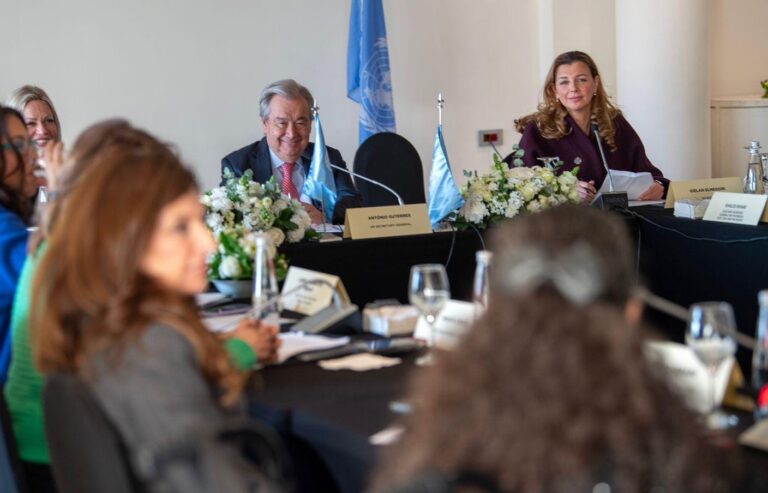
20 / 01 / 2025The President of the Arab Forum for the Rights of Persons with Disabilities and the LUPD, Sylvana Lakkis, met with UN Secretary-General Antonio Guterres during his visit to Lebanon, at a meeting organized by UNWomen, which included a number of active women activists in the humanitarian, social and political fields. In the meeting, Lakkis explained […]

AFRPD Meets with High Commissioner for Human Rights
14 / 01 / 2025President of the AFRPD Sylvana Lakkis was invited to the meeting held by the High Commissioner for Human Rights Volker Türk at the ESCWA building in Beirut yesterday for a dialogue with representatives of civil society organizations. The speech was delivered by colleague Lakkis: “In Gaza, disabled people are annihilated and tortured, and I can’t […]
The Rights of PwDs in War Time
16 / 12 / 2024In an advanced human rights step, and at the initiative of Lebanese MP Halima Kakour, a number of MPs in the Lebanese parliament sent a question to Foreign Minister Abdullah Bouhbib and the caretaker government as a whole through the Speaker of Parliament regarding the rights of disabled people in times of war and the […]
Union and Ma’an meeting with MP Michel Moussa
03 / 09 / 2024A delegation from the Lebanese Union for Persons with Motor Disabilities and Ma’an Association met today with the head of the Parliamentary Human Rights Committee, Dr. Michel Moussa, at the Parliament building in Beirut. The meeting aimed to discuss the rights of people who were permanently disabled as a result of the Beirut port explosion, […]

MP Najat Aoun visits the office of the Lebanese Union for People with Motor Disabilities
24 / 08 / 2024MP Najat Aoun visited the office of the Lebanese Union for Persons with Motor Disabilities in Beirut, where she met with the president of the union, Silvana Al-Laqis, and a number of unionists.During the meeting, Aoun expressed her interest in the issues of people with disabilities, noting the challenges they face in their quest for […]