This program is a central component of the Federation’s strategy, which aims to shift the perspective on disability issues from a charitable and paternalistic model to a rights-based and social model, in order to ensure equal opportunities and full citizenship for people with disabilities in Lebanon.
Definition and Core Objectives of the Program
The Economic and Social Inclusion Program is a comprehensive and ongoing initiative launched by the LUPD with the aim of empowering people with disabilities and promoting their active participation in all aspects of life, with a particular focus on the areas of employment and development.
Core Objective
The program’s primary objective is to remove structural barriers (physical, legal, and attitudinal) that prevent people with disabilities from accessing their fundamental rights, foremost among which are:
- Decent work and employment: Helping people with disabilities enter the labor market and demonstrate their competencies.
- Access to an inclusive environment: Ensuring that public and private spaces are physically accessible and equipped to meet their needs (right of access).
- Social and political participation: Integrating them into decision-making processes and public life.
The Program’s Vision
The program is based on the Union’s conviction that people with disabilities represent a latent asset that does not require significant effort or financial investment to harness, and that development can only be achieved in a society founded on respect for human rights, social justice, and equality.
Launch Date and Key Stages
The program did not launch on a single specific date; rather, it is a long-term process that began as an advocacy campaign that evolved into specific, ongoing projects. Its focus on economic and social inclusion increased significantly following the enactment of Law 220/2000, which pertains to the rights of people with disabilities.
- Pre-Law 220 (1990s): The Federation focused on advocacy and rights-based work to frame the issue of disability within comprehensive legislation.
- Post-Law 220 (2000 and beyond): Efforts shifted to focus on implementing the law, with the Economic and Social Inclusion Program becoming the mechanism for enforcing rights such as employment and accessibility.
Specific projects emerged within this program at various times, such as the “Economic and Social Inclusion” project, around which roundtables with companies were organized in 2013, and the ongoing efforts to implement Law 220/2000 in collaboration with other entities in subsequent years (such as the memorandum of understanding with the “Civil Impact Forum” in 2017).
Program Components and Achievements (Tangible Results)
The program operates through several integrated pillars targeting people with disabilities, companies, institutions, and the surrounding environment:
1. Regarding People with Disabilities (Training and Employment)
This track aims to build individuals’ capacities and secure employment opportunities for them:
- Training and rehabilitation: Providing training and follow-up services (vocational, English language, computer skills, communication skills) to enable people with disabilities to enter the labor market.
- Direct Employment: Working to train and employ a large number of people with disabilities in various fields (for example, more than 400 people with disabilities were trained and employed in various fields as part of the Union’s previous activities).
- Family Support: Providing training to the families of people with disabilities on how to support their children in entering the labor market.
2. At the institutional and private sector level (inclusive environment)
This track aims to change the work culture and ensure companies’ compliance with the law:
- Cooperation protocols: Signing agreements with hundreds of companies (more than 230 companies across various sectors) to adopt inclusion standards and implement Law 220/2000.
- Corporate training: Training corporate human resources staff on inclusive hiring systems and how to manage diversity in the workplace.
- Accessibility modifications: Providing technical and engineering studies and recommendations (such as accessibility studies for over 84 companies) to ensure accessibility in the workplace.
- Employment Offices: Establishing and activating specialized offices to support inclusive employment.
3. At the Policy and Legal Level (Rights-Based Impact)
Through this program, the Union seeks to urge stakeholders to enforce the law:
- Advocacy and advocacy: Launching ongoing campaigns and programs related to fundamental rights such as the right to access, decent work, and an inclusive environment.
- Networking: Building effective partnerships with civil society coalitions, the private sector, and municipalities to expand the scope of inclusion.
- Best Practices: Implementing successful inclusion initiatives in various sectors (such as educational inclusion and school accessibility initiatives) to provide models that can be replicated nationwide.
Content related to the Social and Economic Inclusion Program

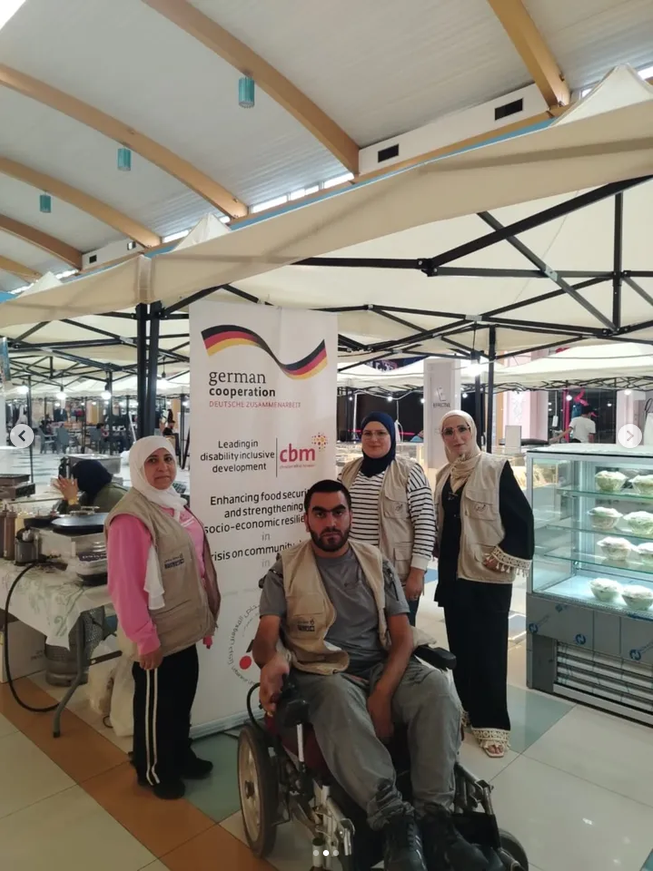
Access Kitchen at From the Bekaa Festival
01 / 07 / 2026Access Kitchen participated in the “From the Bekaa” Festival, organized by Aura Media at Cascada Mall.

Vocational Training
We aim to equip persons with disabilities with the technical and practical skills required by the contemporary labour market, while ensuring the removal of all barriers that may prevent their access to production and work centers.
Workplace Training
We offer a capacity-building program that accompanies corporations, institutions and organizations in transforming accessibility from a general idea into a clear daily practice.

Training sessions related to preparing people with disabilities to enter the labor market
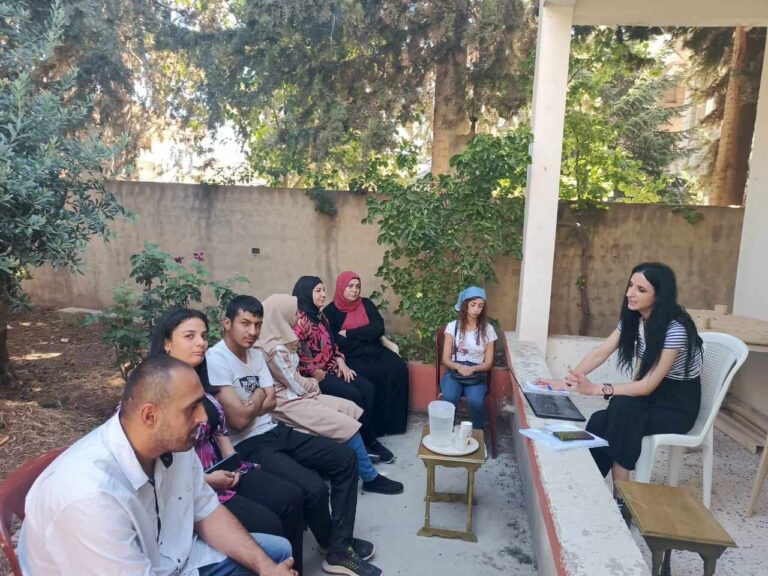
26 / 07 / 2024As part of the economic and social inclusion program in the Central Bekaa, the Bar Elias team of the Lebanese Union for Persons with Motor Disabilities concluded the six training sessions related to preparing people with disabilities to enter the labor market, the session addressed how to master resume writing, preparing for the job interview, […]

Empowering 60 women with disabilities in the Access Kitchen
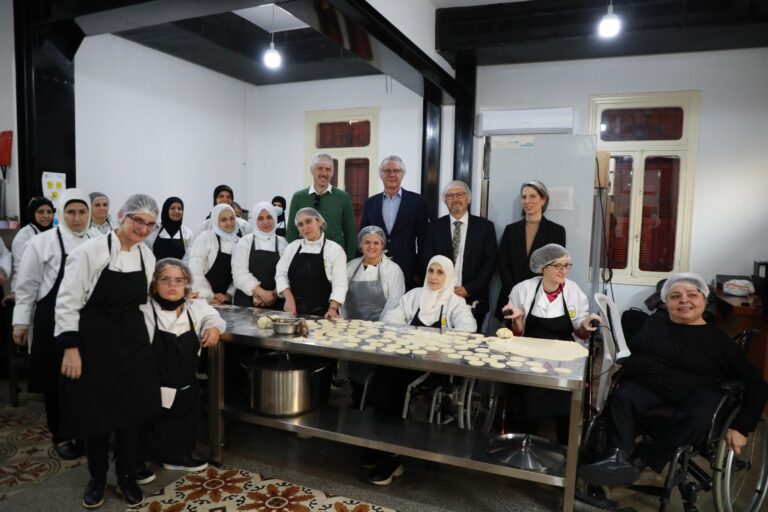
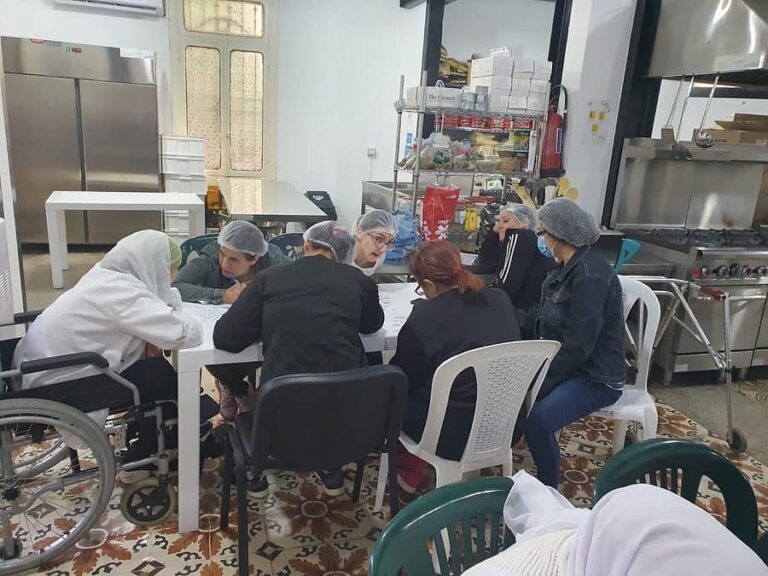
15 / 12 / 2022With the support of the Austrian Embassy in Beirut and UN Women Lebanon, 60 women with disabilities are empowered to prepare, cook and distribute daily hot meals to families in the surrounding areas. The Inclusive Kitchen is not just a community kitchen run by a group of creative women, under the umbrella of the Lebanese […]
Austrian Embassy Beirut Visit to the Access Kitchen
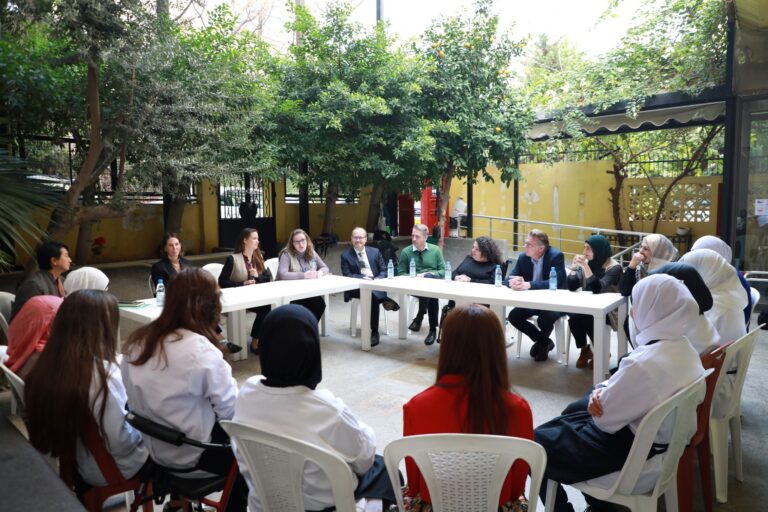
15 / 12 / 2022We were honored to welcome Ambassador Bernard Wrabetz & Gerold Vollmer, Director of MENA from Österreichisches Außenministerium & Ambassador Dr. René Amry from the Austrian Embassy Beirut – Österreichische Botschaft Beirut to our community kitchen Access Kitchen which is led and run by 60 inspiring women. This project is supported by the Austrian Embassy in […]
A workshop and psychosocial support session for women in an inclusive kitchen
11 / 11 / 2022To build an integrated team and improve their performance, a group of women from our community kitchen – Access Kitchen – benefited from a workshop and a psychosocial support session. The Federation continuously works on empowering women to help and support each other, accept and value self-worth, develop conflict resolution skills, recognize and address needs, […]