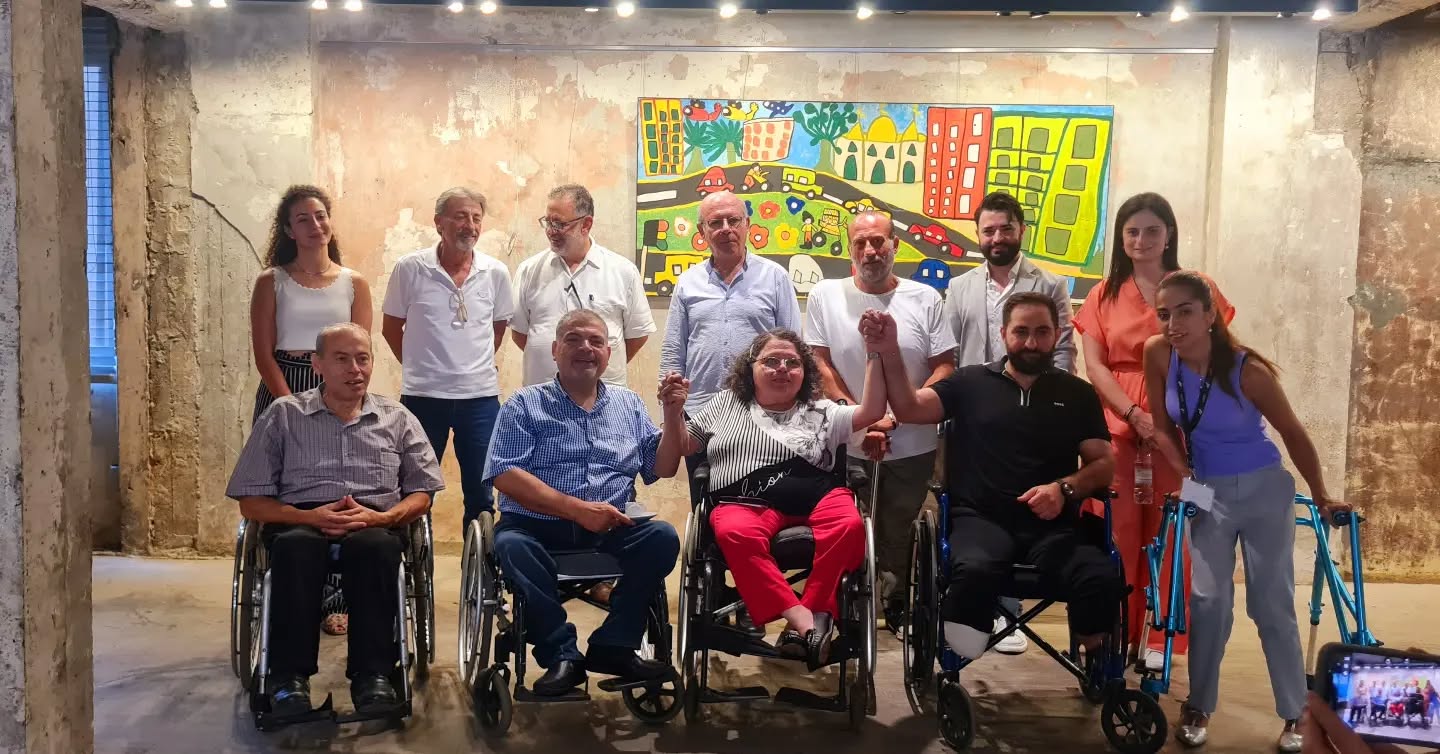
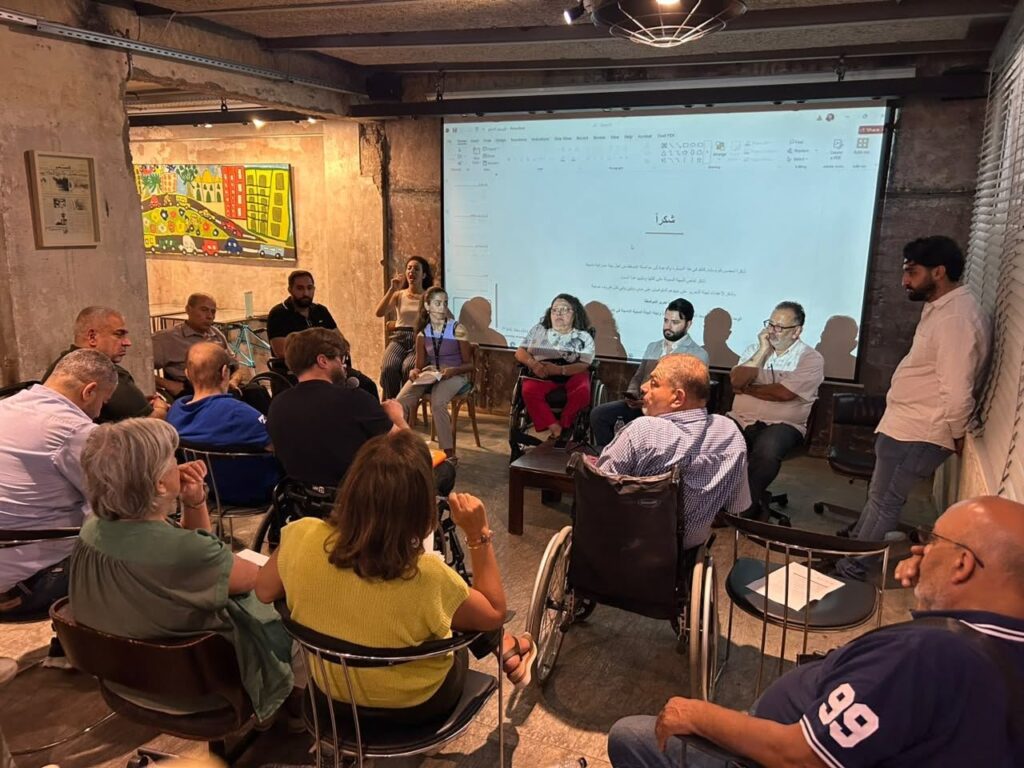
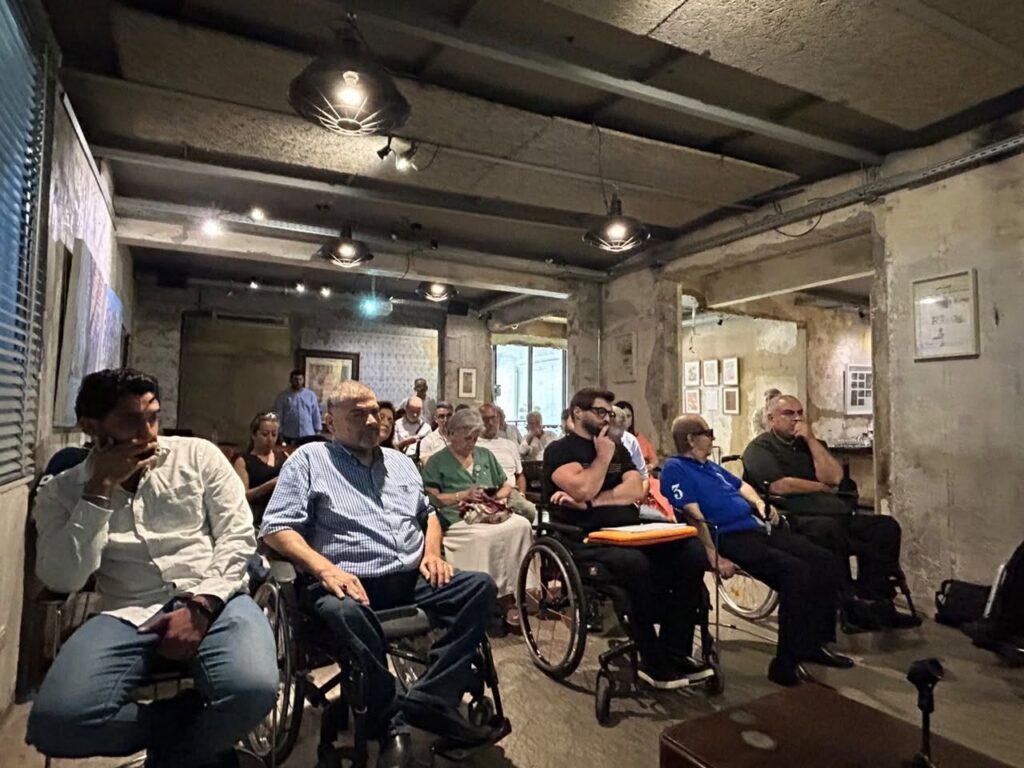
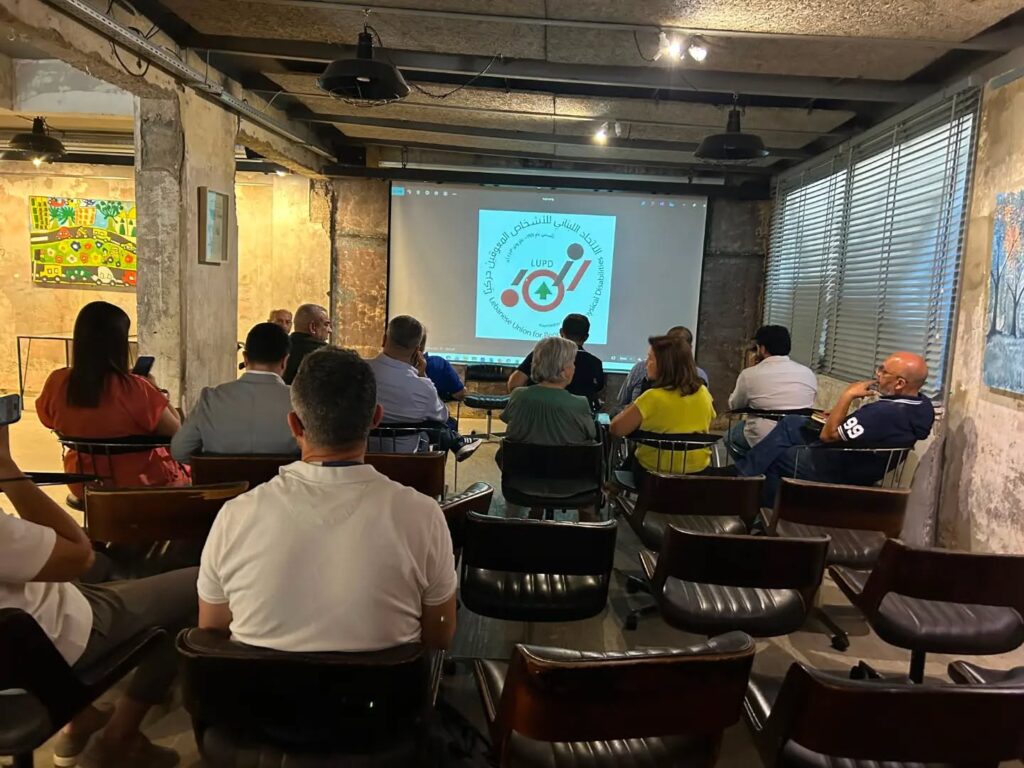
On Tuesday, August 18, 2026, the LUPD organized a discussion session to review the Accessible Sidewalk Standard draft, entitled “Inclusive Guidelines for the Accessibility and Use of the Built Outdoor Environment.” The session was held at Multaqa Assafir in Beirut, with the participation of the committee of expert engineers who prepared the document, representatives of organizations of persons with disabilities, UN agencies, and other stakeholders.
The session was held as part of preparations to submit the document to the Lebanese Standards Institution (LIBNOR), with a view to proposing its adoption as a national engineering standard.
Moderated by Luna Yamin, the session opened with the Lebanese national anthem. In her opening remarks, LUPD President Sylvana Lakkis stressed that designing inclusive sidewalks and public spaces is not a demand limited to persons with disabilities, but a community-wide need that also concerns older persons, children, pregnant women, and everyone else. She noted that in Lebanon, more than 150 people reach the age of 65 every day, while persons with disabilities are estimated by the United Nations to represent between 10 and 15 percent of the population.
She emphasized that this initiative represents the culmination of more than four decades of LUPD advocacy, in partnership with LIBNOR, the Order of Engineers, and the Friedrich Ebert Foundation, to transform the right to accessibility from a legal provision into national standards and everyday practice.
Lakkis also highlighted that the cost of exclusion is greater than the cost of inclusion.
She explained that the session aimed to review the draft with the participation of persons with disabilities, their organizations, and technical experts, based on the principle of “Nothing About Us Without Us.” She also stressed the importance of building alliances with professionals, institutions, and decision-makers, as meaningful change on the ground cannot be achieved through the disability movement alone.
In his remarks, Hussein Al-Maalem, Project Manager at the Friedrich Ebert Foundation, highlighted the importance of cooperation between the Foundation and LUPD in advancing the rights of persons with disabilities, emphasizing that access to and use of public spaces is a fundamental right.
Engineer Rayan Saab, an accessibility and inclusive-environment specialist speaking on behalf of the committee responsible for preparing the document, presented the development process, the challenges encountered by the committee, and the next stage following the incorporation of feedback emerging from the discussion.
Engineer Bashar Abdel Samad, an inclusive-environment specialist, presented the draft document, which was prepared with the support of the Friedrich Ebert Foundation. The presentation focused on the relationship between persons with disabilities and public spaces in general, and sidewalks in particular.
The document covers six key areas of outdoor design: sidewalks and pedestrian pathways; pedestrian crossings and designated pedestrian areas; stairs; ramps; and parking spaces.
He explained that the document stems from Lebanon’s legal and national commitments and seeks to implement applicable legislation while identifying and addressing geographical challenges through flexible technical solutions. The document also adopts a rights-based and human-centered approach, viewing inclusion not as an additional technical feature, but as a fundamental condition for the right to participate in public life.
The presentation was followed by a discussion in which representatives of organizations of persons with disabilities shared recommendations to improve the draft and ensure that it adequately addresses the needs of people with visual, intellectual, and hearing disabilities. The discussion also provided an opportunity to hear the perspectives of representatives of UN agencies working in Lebanon.
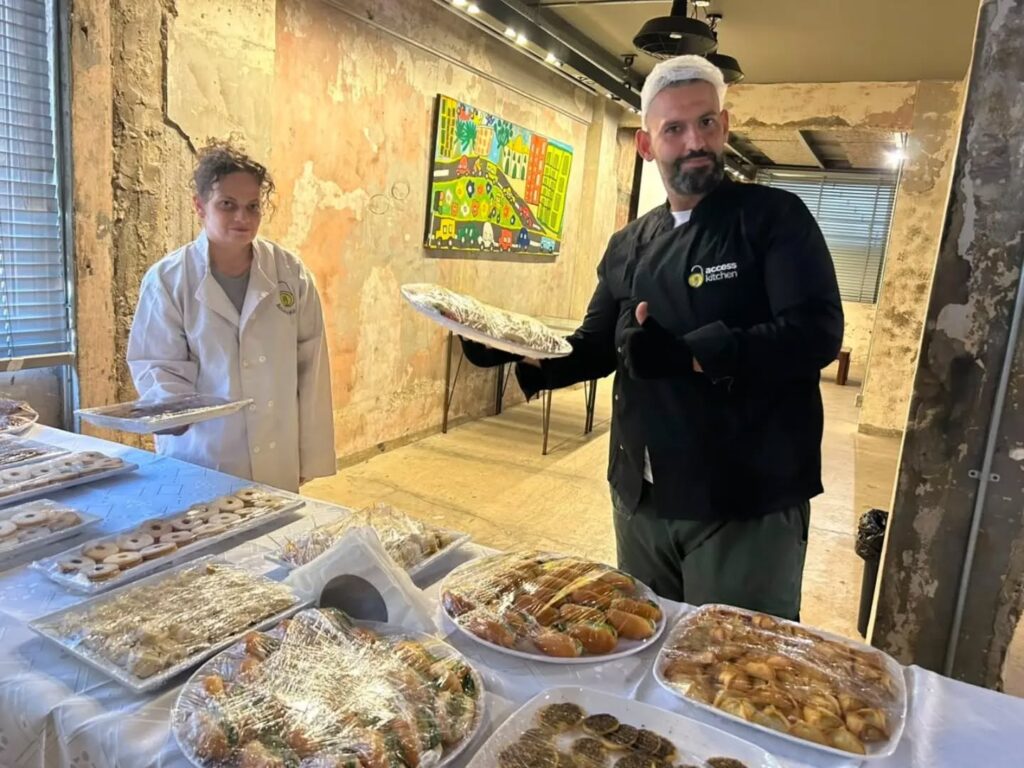
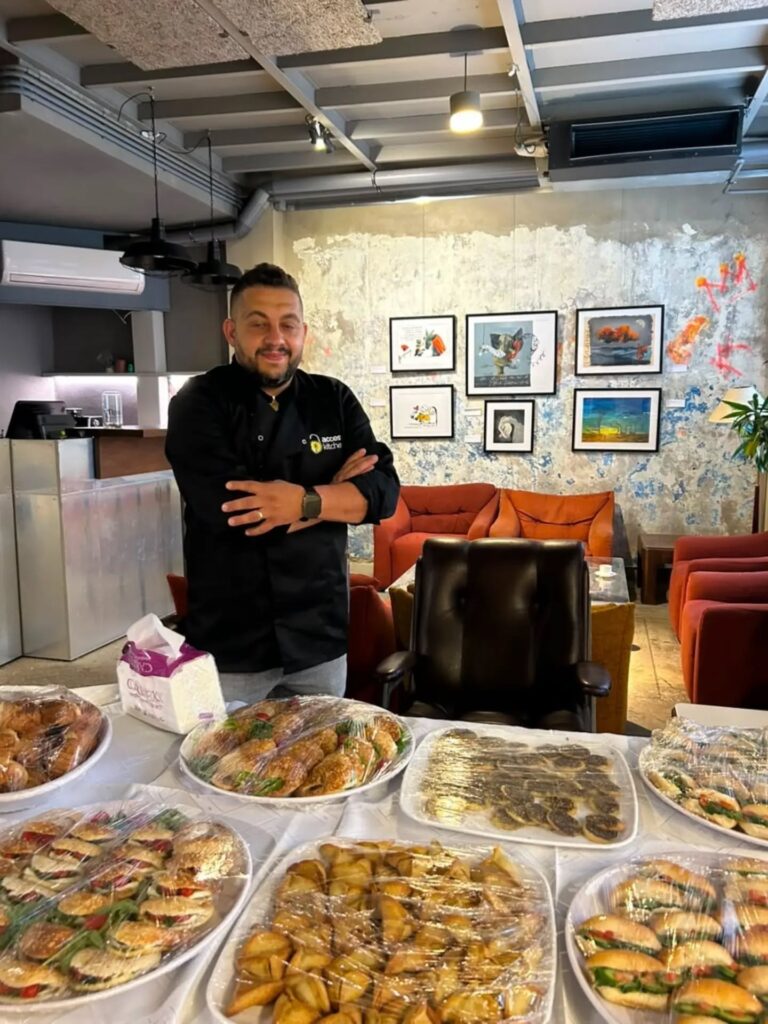
Catering by Access Kitchen
Following the session, participants enjoyed pastries, desserts, and hot beverages prepared by the community kitchen, Access Kitchen, represented by Chef Rami and two trainees with disabilities, Nicole and Nader.
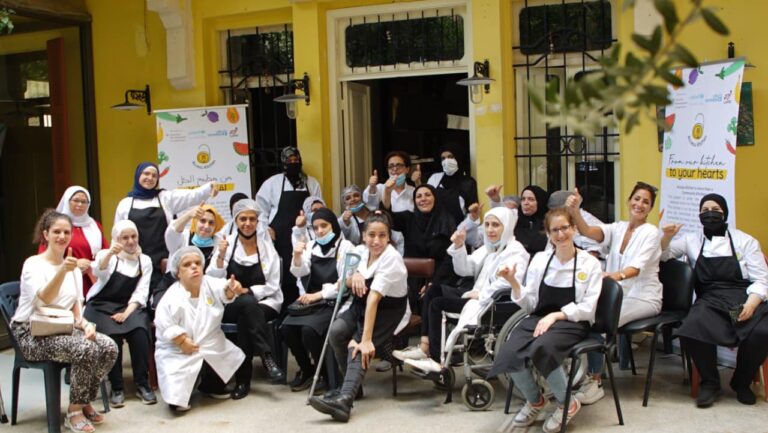
Access Kitchen in Beirut is one of three LUPD kitchens operating across Lebanon, alongside those in Saida and Zahle, providing persons with disabilities with practical cooking and meal-preparation skills as part of a pioneering training initiative.