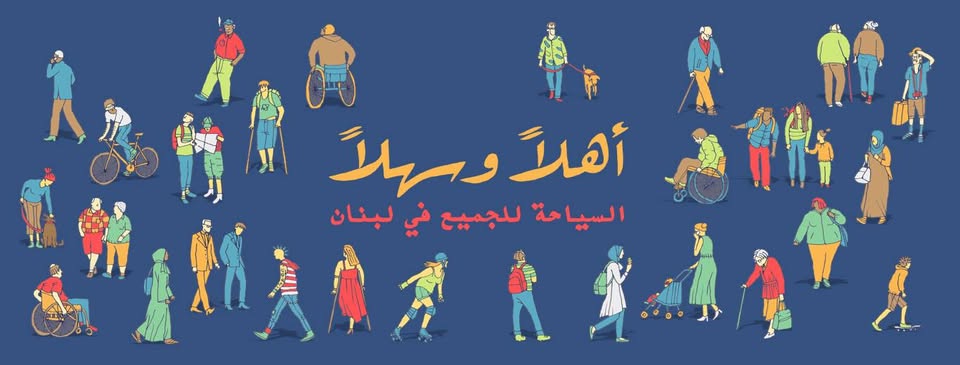
Inclusive tourism aims to provide environments, destinations, services and products that are accessible, without any discrimination, to people with accessibility difficulties, ensuring that the dignity and autonomy of these people are respected.
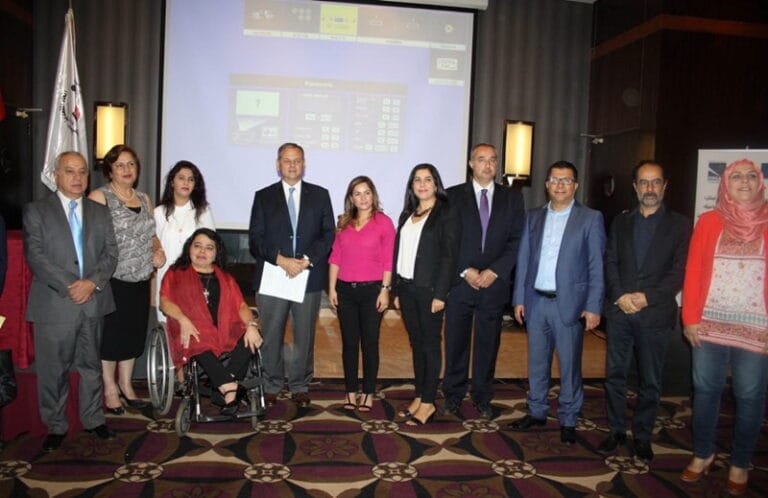
The project “Tourism for All in Lebanon: A New Approach Towards Inclusive Socio-Economic Development” was launched in partnership between the LUPD and the European Network for Accessible Tourism (ENAT), under the European Union-funded Afkar 3 program, managed by the Office of the Minister of State for Administrative Development.
Why?
Although tourism is a leading industry in the country, the means and mechanisms for inclusion are still lacking. As a result, people with disabilities or even the elderly are unable to benefit from the sector, whether as tourists, business owners, or workers. The lack of inclusion and flexibility in the tourism sector is reflected in:
- The government and relevant authorities are largely ineffective in implementing Law 220/2000 on the rights of persons with disabilities
- Stakeholders in the tourism sector have little capacity to incorporate disability standards, due to a lack of resources, tools and skills and the prevalence of stereotypical attitudes towards disability
- The need to empower people with disabilities and their organizations about the importance of tourism in promoting socio-economic development
Tourism: Facts and Figures
Over the past decades, tourism has grown steadily and diversified, becoming one of the fastest growing economic sectors in the world. In its current form, tourism is inextricably linked to development, making it a key driver of socio-economic progress. The size of the tourism industry has become as large as – or even larger than – exports of oil and food products.
In Lebanon, according to the World Bank, the percentage of people with disabilities reaches 15% of the population, while disabled people’s organizations adopt the international percentage (10%) – the percentage adopted by the World Health Organization (WHO).
While Lebanon’s tourism industry is one of the most important pillars of the national economy, this percentage of people with disabilities cannot benefit from this vital sector due to the lack of comprehensive policies that would ensure the adoption of minimum standards of inclusion in an important sector like tourism.
Objectives of the Project
Strengthening the role of the tourism sector as an important asset for socio-economic development, with the aim of adopting a methodology to integrate people with disabilities in Lebanon.
More specifically: Establishing a supportive framework whose main roles will be:
- Defining a work plan to implement pioneering models that can in turn establish inclusive tourism at the regional level;
- Promoting the culture of inclusive tourism by promoting and disseminating it through cooperation with (local administrations, municipalities, the private sector, civil society, and organizations);
- Strengthening the national partnership between the responsible authorities to develop policies and legislation aimed at adopting a culture of inclusion and providing everything necessary to create pioneering tourism models in the field of inclusive tourism in the various regions targeted by the project;
- Provide mechanisms to maintain an inclusive tourism environment by empowering women and men, as well as youth, as active partners in the country’s socio-economic development process.
What is a Flagship Model?
A tourism model that is adapted to accommodate all people with different needs – barrier-free spaces and places – whose multiple services benefit all people, including people with disabilities, opens up employment opportunities for people with disabilities, and builds a coordination framework with facilities and organizations involved in tourism development.
Target Groups
- People with disabilities and their families
- Local authorities and tourism companies
To achieve the desired results, the project will work with:
- Private sector: Tourism companies, hotels, restaurants, transportation and travel agencies
- Policy makers in the public sector (Ministry of Tourism, Ministry of Culture, Ministry of Labor, Ministry of Education and Higher Education Public Vocational Education Institute and Beirut International Airport).
- Civil society policymakers (tourism unions, organizations such as the Chouf Cedars Reserve, Middle East Airlines, Chamber of Industry and Commerce).
- Local authorities: Jbeil Municipality, Baalbek Municipality, and Tyre Municipality
Public Benefits
- Defining and embedding the culture of inclusive tourism
- The diversity of inbound and outbound tourism in Lebanon’s cultural and recreational sites
- Creating Inclusive Employment Opportunities for People with Disabilities in Lebanon’s Tourism Sector
- Promoting inclusive socio-economic development and inclusion in targeted areas
- Improving Lebanon’s tourism image by applying international standards of inclusion in its leading tourist cities to make them exemplary, which in turn leads to the prosperity of the tourism sector by attracting tourists with different needs (external and internal tourism).
Mutual Benefits
- Strengthening the local role of the targeted areas, which also attracts a larger number of tourists with different needs and comfort seekers.
- In this context, inclusive tourism must be addressed, showing its human rights impact on people with disabilities and its financial impact on the tourism sector, especially since this tourism constitutes 10% of the total global tourist traffic.
- In unstable security conditions, targeted areas will attract the largest number of tourists (domestic tourism), as locals will always seek entertainment.
- Raise knowledge and awareness about the concept of disability and the culture of inclusion and diversity.
Other Benefits
- Increase profits by targeting a wider range of customers
- Economic development through increased profits
- Utilizing diverse energies will increase employee productivity
- Specialized training and capacity building workshops for administrators and HR staff, as well as specialized training workshops for all employees