The Lebanese Parliament postponed municipal and optional elections three times between 2022 and 2024, and in April 2024 extended the term of municipal councils and mayors until May 31, 2025, at the latest. In the new era, with the election of General Joseph Aoun as President of the Republic in early 2025, and after the “Reform and Rescue” government headed by Nawaf Salam was formed in February of that year, attention turned to the elections held in May 2025 in all Lebanese governorates, even though the country had just emerged from Israeli aggression that left widespread destruction in the south, the Bekaa, and the southern suburbs of Beirut.
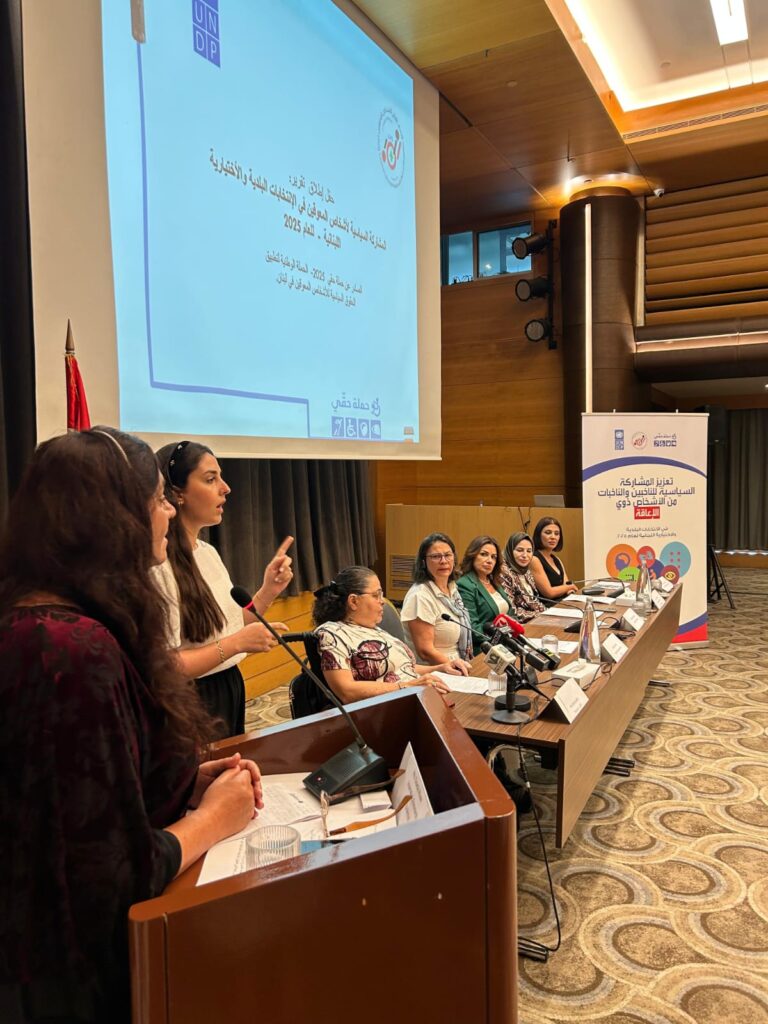
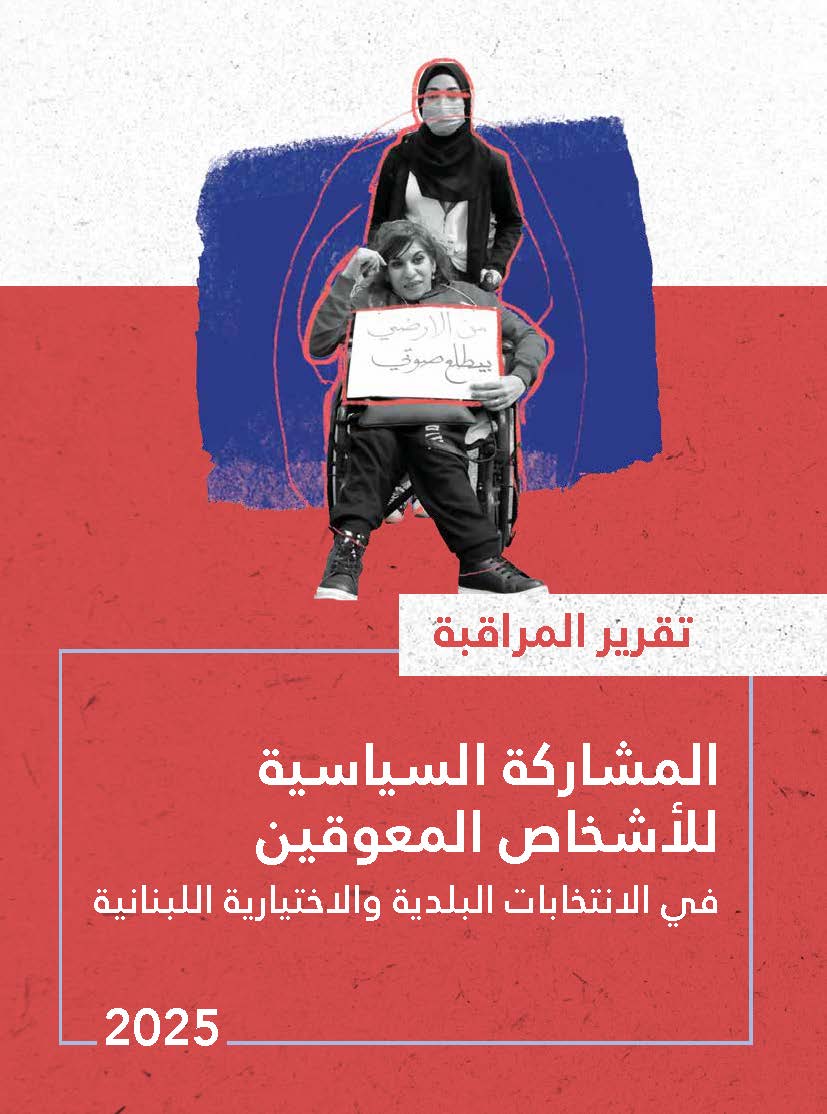
As in every election since 2005, the LUPD relaunched its “My Right Campaign – National Campaign for the Implementation of the Political Rights of People with Disabilities” to coincide with the 2025 municipal and mayoral elections, under the slogan “From the Ground Floor, My Voice Will Be Heard.” This is to emphasize the role of persons with disabilities in political life, facilitate their participation in elections, and bring them out of the marginalization that dominates their participation in political life, which is caused by physical barriers, the absence of alternative means of participating in elections, and inherited and preconceived ideas and a condescending view of their abilities. Through the campaign, the LUPD affirms its deep belief that participation in municipal and mayoral elections is a right of all citizens and a national duty so that citizens can elect their representatives to the municipalities and claim their rights. This participation reinforces one of the goals of the campaign launched twenty years ago, by activating the role of persons with disabilities in political life as a pressure group and highlighting their issues through elections.
- Demands: Ahead of the 2022 parliamentary elections, the campaign had set three demands: the use of ground floor rooms in polling centers as polling stations, the operation of elevators where available, and the creation of polling stations in the courtyards of polling centers where the first two demands were not possible. However, the experiment of setting up booths in the courtyards of polling centers did not bear fruit at the time, so the campaign settled for the first two demands in the 2025 elections. In March and April preceding the elections, it intensified its campaign of demands towards the relevant ministries (Ministry of Interior and Municipalities, Ministry of Education and Higher Education, Ministry of Social Affairs). It sought to convey its demands to the relevant parties and persons with disabilities through alliances, coalitions, civil society organizations, and organizations for persons with disabilities.
- Monitoring and Observation: After developing the monitoring survey form, campaign volunteers underwent two intensive training sessions on its use and on documenting violations against voters with disabilities in and around polling centers. During the four days of elections, teams of observers, consisting of 103 people with permits issued by the Ministry of Interior and supported by logistical and administrative teams, followed specific routes to monitor the campaign’s polling centers in various governorates, which were schools and educational institutions. There were 261 polling centers in total, spread across 16 districts in addition to the governorate of Beirut. These centers were located in 171 towns and cities within the six governorates and comprised 2,231 polling stations.
Overall, despite the violations against voters with disabilities, most of which can be overcome through the enforcement of laws and the training of officials at polling centers, security forces, and candidate representatives, and despite the difficulties in access that can be overcome in cooperation with the Ministries of Interior and Education, it can be said that the campaign has established a model for inclusive polling centers by adopting the ground floor for the upcoming parliamentary elections in 2026.
The monitoring report issued by the My Right campaign on the political participation of persons with disabilities in the 2025 Lebanese municipal and mayoral elections includes the results of the work of the monitoring teams, who were provided with a form divided into three sections.
- Section I: The readiness of polling stations for voters with disabilities;
- Section II: Monitoring violations against voters with disabilities;
- Section III: Interviews with voters with disabilities on election day.
The report also included introductions, general background information, and interim recommendations for the upcoming parliamentary elections, as well as long-term recommendations, such as the strategy outlined in the My Right campaign policy paper, which seeks to ensure that persons with disabilities enjoy their civil and political rights to run for office and vote independently and with dignity.
The most important recommendations that can be implemented before the upcoming parliamentary elections are:
- Adopting the “megacenter” model (a large integrated polling center in each district) to solve a number of problems that prevent voters with disabilities from voting independently.
- Adopting public schools as polling centers and enshrining the principle of voting for voters with disabilities in polling stations on the ground floor, after providing the necessary data and corrected lists (through cooperation between the Ministries of Interior, Social Affairs, and Education) to enable voters with disabilities to vote on the ground floor of their polling centers.
- Establish the “Administrative Committee for the Development of the Guiding Plan” provided for in Article 3 of Decree 2214/2009 as soon as possible.
- Train polling centers administrators and their assistants on how to deal with voters with disabilities (motor, hearing, visual, and mental), and distribute awareness materials to election officials, candidates, and their representatives.
- Change the ink used in polling stations and adopt indelible ink that guarantees confidentiality and can be used by voters with disabilities.
- Activate and disseminate the media code of conduct “Persons with Disabilities and the Media.”