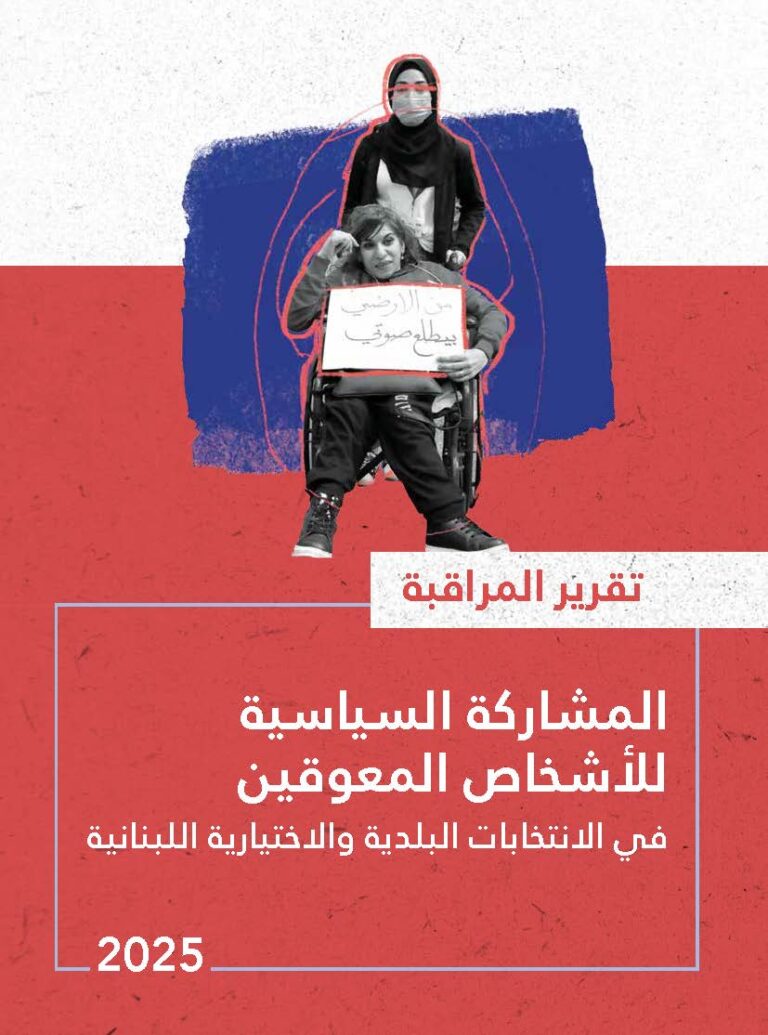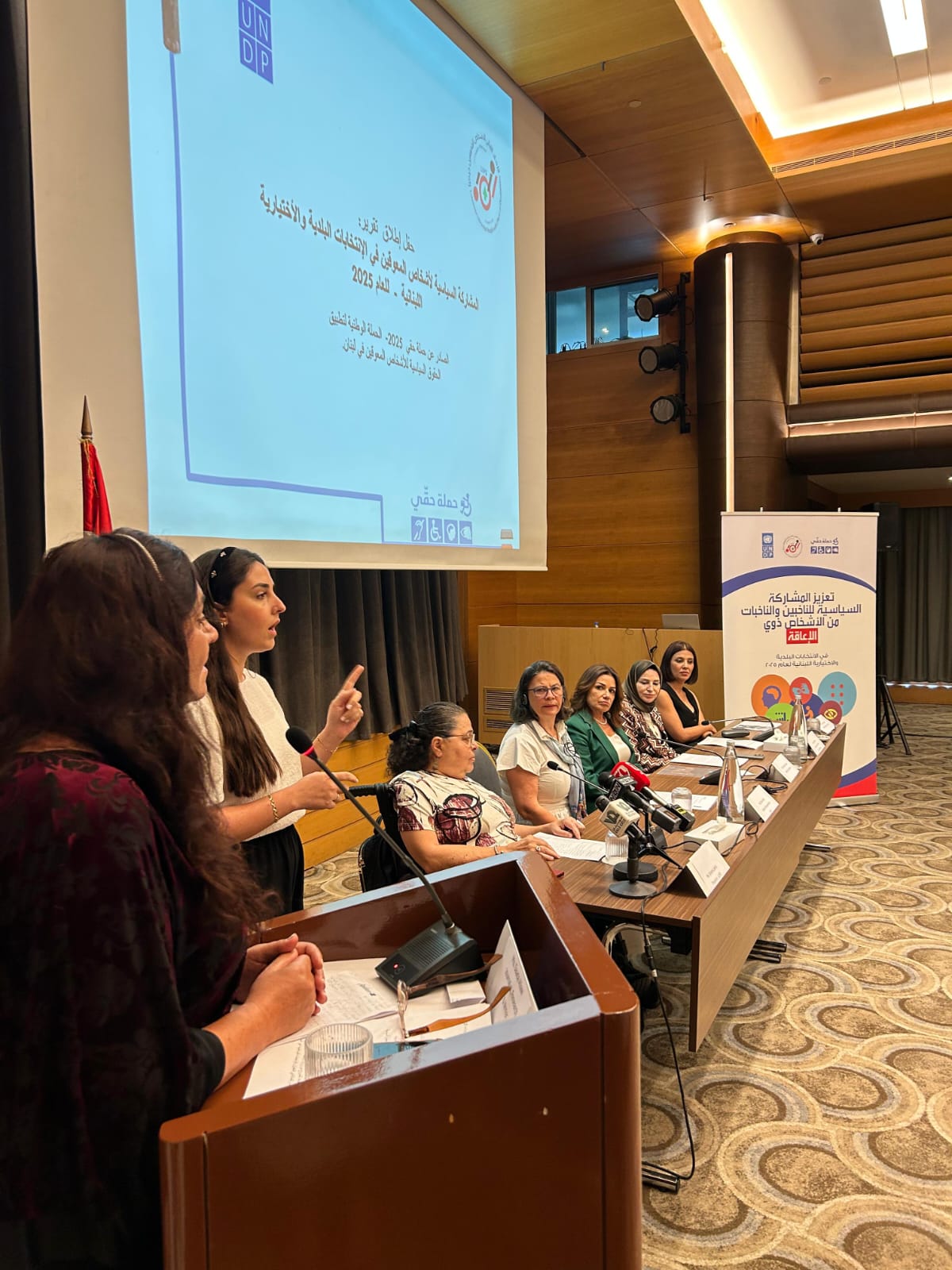
The LUPD, in partnership with the UNDP, launched the My Right Campaign report, “Political Participation of Persons with Disabilities in the 2025 Lebanese Municipal Elections— A Monitoring Report” at a ceremony held at the Radisson Blu Hotel in Beirut. The event was attended by Minister of Social Affairs Haneen Sayyed, the representative of the Minister of Interior and Municipalities, Ahmad Hajjar, Director General of Political Affairs and Refugees, Faten Younes, and representatives from civil society organizations, organizations for persons with disabilities, human rights activists, and other interested parties.
After the Lebanese national anthem, the host, Saada Allouh, summarized the journey of the My Right Campaign over the past two decades, its demands, and the extent of the response of successive ministries to the campaign.
Sylvana Lakkis, President of the LUPD, welcomed the participants and commended the ongoing cooperation between the campaign and the Ministries of Social Affairs and Interior, and the qualitative breakthrough achieved in the recent elections through the Ministry of Social Affairs’ provision of data on disabled voters and their transfer to the Ministry of Interior. Lakkis focused on the campaign’s slogan, which it has championed since 2022: “From the Ground Floor, My Vote Will Be Heard”, and the need to prepare in advance for next year’s parliamentary elections, particularly by activating the committee stipulated in Implementing Decree 2214/2009 to ensure the voting process is facilitated for disabled voters, and by training polling stations on how to deal with disabled voters to avoid a series of violations against them. She called for removing obstacles that prevent people with disabilities from participating in the general elections with dignity and independence, both as candidates and as voters, and called for concerted efforts to move forward towards inclusive parliamentary elections.
UNDP Resident Representative, Blerta Aliko, noted that “the report showed an increase in the number of polling stations accessible to persons with disabilities, as well as a rise in awareness among polling station staff and security personnel on how to support them. This progress constitutes a foundation upon which to build ahead of the 2026 parliamentary elections, ensuring accessibility and promoting the inclusive political participation of persons with disabilities.”
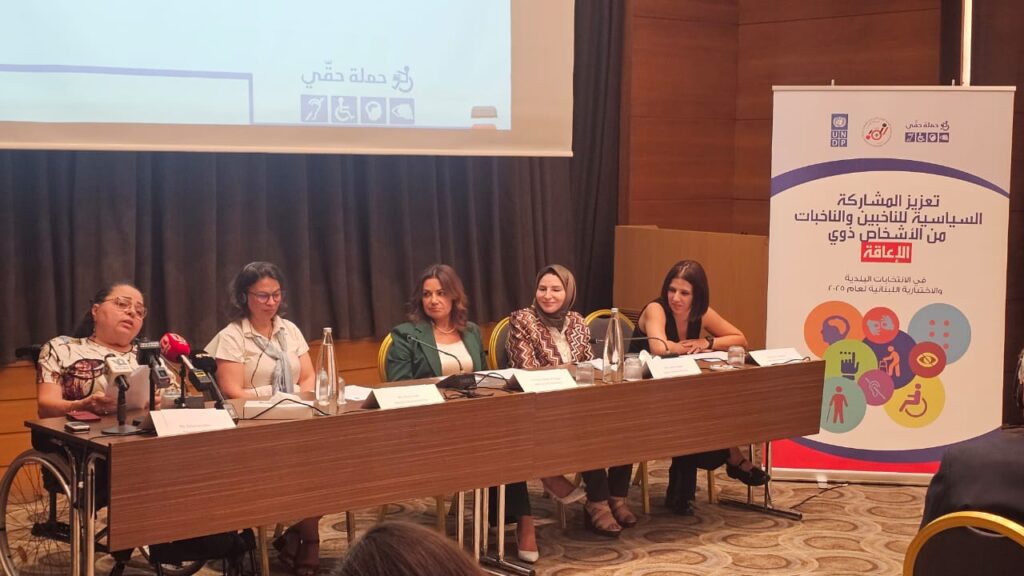
In her speech, Minister of Social Affairs, Haneen Sayed, noted that “the recent elections marked a milestone through the cooperation between the Ministry of Social Affairs and the Ministry of Interior and Municipalities, where, for the first time, data on persons with disabilities was made available to facilitate the voting process. This step helped a number of voters with disabilities exercise their right to vote with independence and dignity, but it must not remain an exception but rather become an established rule.” She recalled the role of the Ministry of Social Affairs in the committee drafting Implementing Decree 2214/2009, which facilitates the voting process for voters with disabilities. This demonstrates that the process of enhancing the political participation of persons with disabilities is not an emergency measure, but rather one that must be reinforced with further practical measures to ensure inclusiveness and equality. She noted that “persons with disabilities ran in the municipal and mayoral elections this year.”
Director General of Political Affairs and Refugees, Faten Younes, read a speech by Minister of Interior and Municipalities, Ahmad Hajjar, in which he stated that, “The Ministry of Interior and Municipalities, based on its constitutional responsibility, attaches utmost importance to enshrining the principles of justice and equality in the electoral process. It considers the political participation of persons with disabilities not a demand, but rather a democratic right that must be protected and exercised with dignity and independence.” He added, “Despite the limited time and challenges we faced, we worked to take practical measures to facilitate this participation, including requesting data from the Ministry of Social Affairs, which graciously responded to our request. We analyzed the data and approved some polling stations on the ground floors where possible. We also trained polling station staff to receive voters with disabilities and meet their needs. We took the necessary measures to facilitate their access to polling stations in a way that preserves their independence.” He emphasized that, “The Ministry of Interior and Municipalities will remain committed to working to ensure a fair and accessible electoral environment, and that together we are capable of transforming this report into a roadmap towards effective political participation for all Lebanese.”
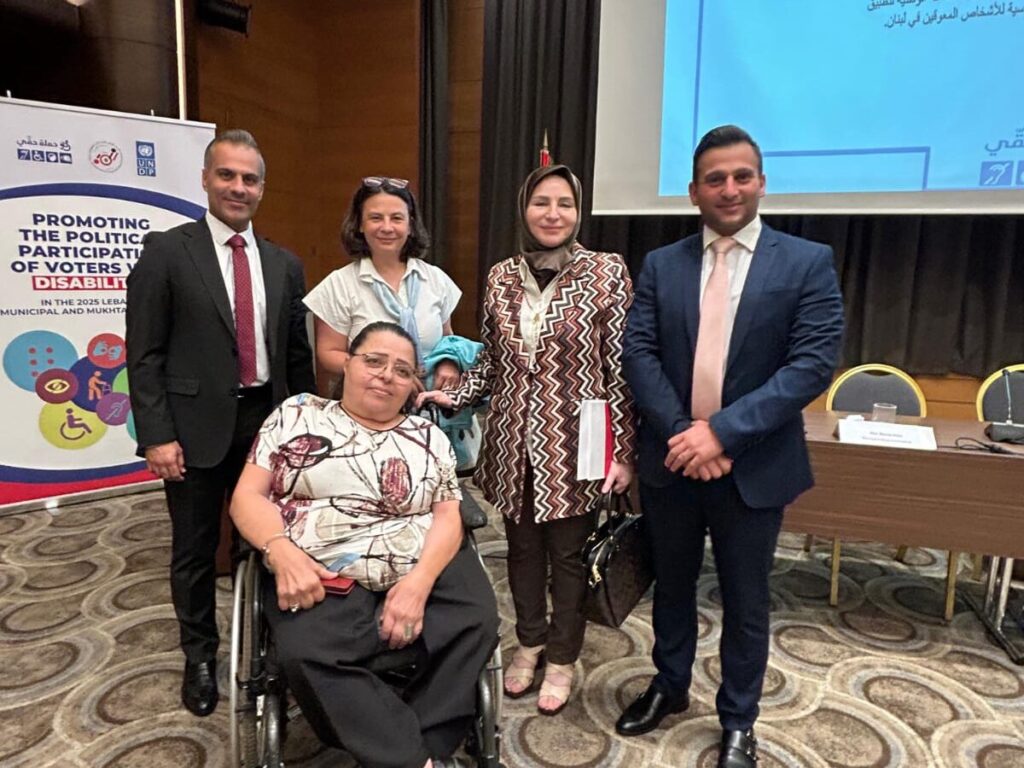
Report Launch
Following the speeches, a short video was screened summarizing the period leading up to the elections last May. The LUPD Executive Director, Hanine Chemaly, presented the results of the monitoring report, examining the progress made and subsequent violations of the rights of voters with disabilities at polling stations and their suitability for their needs. She also presented the results of interviews conducted with voters with disabilities at the stations.
Lakkis then addressed the most important recommendations that should be implemented in cooperation with the Ministries of Interior, Social Affairs, and Education, as well as security and human rights organizations, during the next phase. These recommendations include the locations selected as polling stations, most of which are public schools, as well as how to deal with candidates and voters with disabilities, the need for prior training for polling station staff, and the need to adopt the “megacenter” stipulated in the electoral law, with at least one center in each district.
Finally, testimonies from the last elections were presented, and participants discussed the report’s findings.