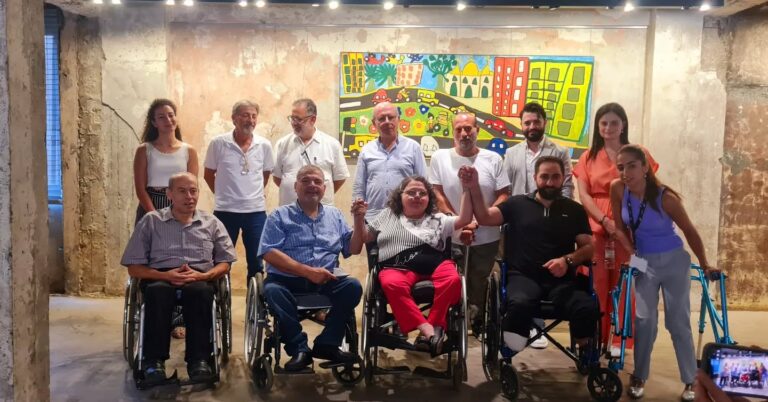
The Build for Everyone Campaign is a national advocacy project launched in December 2021, organized and led by the LUPD. This campaign is not merely a passing call but a civil rights statement demanding the fair and full application of legislation related to universal access and an inclusive environment in Lebanon. It is a strategic step toward dismantling the architectural and social barriers that prevent approximately 10 to 15 percent of the population living with disabilities from fully participating in public life.
Legal Framework: Demanding the Activation of Dormant Texts
The campaign is grounded in the authority of Law 220/2000, the comprehensive law on the rights of persons with disabilities. Pressure focuses specifically on activating and applying texts that have remained ink on paper for over two decades. In particular:
- Engineering and urban access: The campaign demands the mandatory application of inclusive engineering standards to all public and private buildings open to the public, including hospitals, schools and universities, government institutions, banks, and shopping centers.
- Roads and sidewalks: Build for Everyone calls on municipalities and infrastructure authorities to modify sidewalks and roads to ensure proper ramps, avoid obstacles, and provide sidewalks that serve wheelchair users, blind persons (via tactile pathways), and older people.
- Public transport: A fundamental pillar of the campaign is demanding that public transport means (buses, taxis, train stations where they exist) be made accessible to everyone, ensuring freedom of movement as a basic right for economic and social participation.
Vision and Strategy: Inclusion as a National Value
The core vision behind the Build for Everyone Campaign is to establish the idea that accessibility is a collective responsibility and an inalienable civil right, not an additional service or privilege. Inclusion, according to the campaign, means transforming mental frameworks before changing concrete structures.
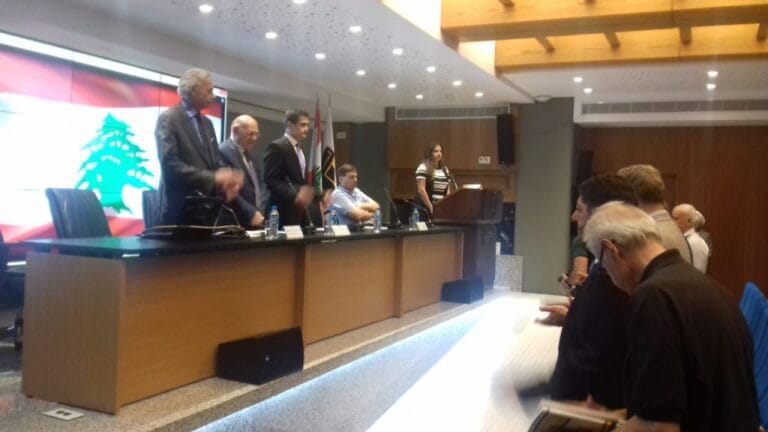
- Engagement with decision-makers: The campaign works to establish direct dialogues with Parliament and relevant ministries (such as Public Works and Transport, Social Affairs, and Interior and Municipalities) to issue the implementing decrees of Law 220/2000, which have not yet been issued, thus hindering the law’s activation.
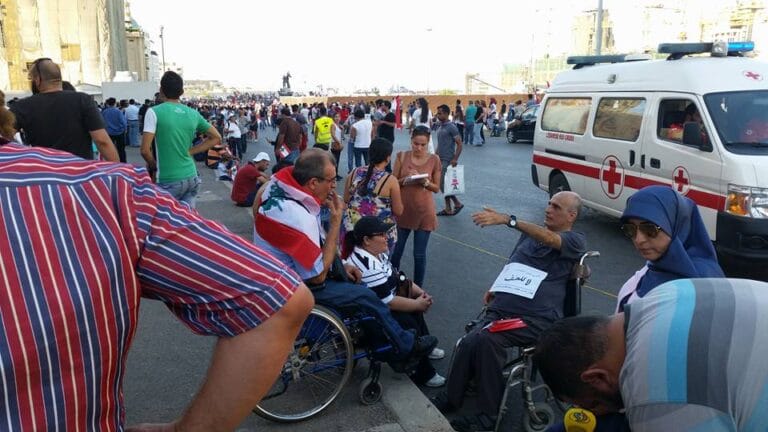
- Community and local mobilization: Modern communication tools and local meetings are used to build support from public opinion and civil society, as well as to pressure municipalities at the district level to adopt local action plans for implementing accessibility standards within their geographical scope.
- Documentation and accountability: The campaign documents cases where access standards are violated in new projects and uses this documentation for legal and media accountability of violating entities, whether public or private.
Expected Impact and National Importance
The importance of Build for Everyone extends beyond assisting persons with disabilities; it is an investment in human capital and social justice in Lebanon.
- Economic empowerment: When access becomes available, persons with disabilities can reach work and study opportunities and contribute effectively to the economy, reducing the financial burden on the state and families.
- Improving quality of life for everyone: Accessibility benefits not only wheelchair users but also mothers using strollers, older people with mobility difficulties, and those carrying heavy loads or experiencing temporary injuries.
- Alignment with international conventions: The campaign aims to push Lebanon toward fulfilling its obligations under the UN Convention on the Rights of Persons with Disabilities, of which inclusion is a fundamental pillar.
In conclusion, the Build for Everyone Campaign represents a relentless effort to transform Lebanon into a truly inclusive country, reflecting respect for human rights and the diversity of its citizens, and ensuring that the built environment and surrounding spaces belong to everyone, without exception.
Related Content

Discussion Session on the “Accessible Sidewalk Standard”
18 / 08 / 2026the LUPD organized a discussion session to review the Accessible Sidewalk Standard draft, entitled “Inclusive Guidelines for the Accessibility and Use of the Built Outdoor Environment.”
Towards Inclusive Municipal Policies: A Research and Advocacy Project for Accessible Lebanese Cities for All
This project focuses on enhancing the social inclusion of persons with disabilities through the development of inclusive municipal policies in three main Lebanese regions.

Architectural Consultation
Toward accessible buildings that open their doors to everyone. Do you find it difficult to use a place because of too many barriers? Does an entrance, a staircase, a narrow corridor, an unclear sign, or an unsuitable design prevent you from moving, getting around, understanding, hearing, or communicating easily? We can help. The problem is […]

Accessibility Guide for Persons with Disabilities
25 / 07 / 2019The President of the Lebanese Union for Persons with Motor Disabilities, Silvana Al-Laqis, emphasized “the necessity of creating decisions for an inclusive environment because it is a human right and its non-implementation violates a convention and weakens social cohesion,” and wished everyone to adopt “facilitating movement to promote inclusive life for people with disabilities in […]
Announcing the readiness of the Saida Technical Institute
14 / 10 / 2016Within the framework of the inclusive vocational education project, the Lebanese Wheelchair Union organized on Friday, October 14, 2016, an activity to announce and promote the readiness of the Saida Technical Institute to receive students with disabilities, where the team toured the offices of the mukhtars and distributed leaflets in this regard, and the teams […]
Kafr Zabad: Monitoring the municipality, clinic and public school
08 / 10 / 2016On Saturday, October 8, 2016, the Lebanese Wheelchair Union, in partnership with the UNESCO Mediterranean Youth Networks Project “Empowering Youth and Communities to Lead in Defending the Rights of Persons with Special Needs in Lebanon”, carried out a field audit tour to verify the validity of the monitoring information carried out by the “Cultural Club […]
The right of persons with disabilities to a habitable environment according to Law 220/2000
25 / 09 / 2012Finally, after more than 11 years of waiting, Decree No. 7194 was issued on December 16, 2011 to determine the minimum standards for buildings and structures, published in the Official Gazette No. 61 on December 29, 2011, available at the following link: http://jo.pcm.gov.lb/j2011/j61/wfm/m7194.htm This decree constitutes one of the most prominent implementation decrees stipulated by […]

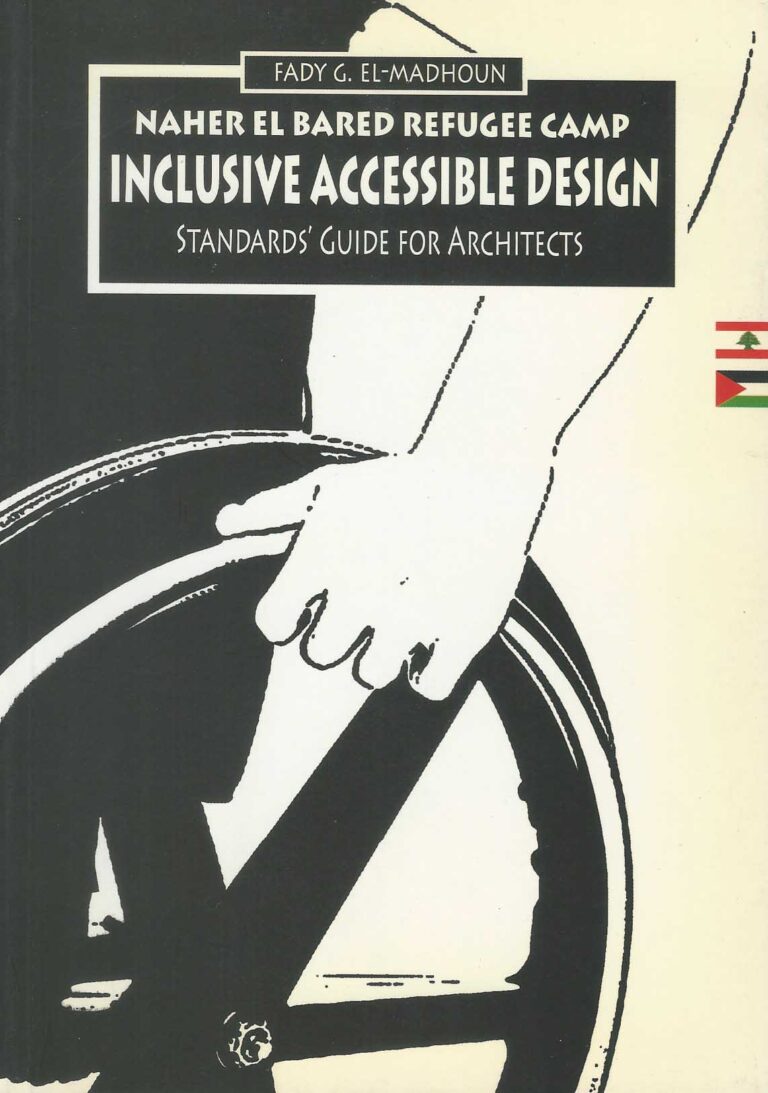
Naher al Bared Refugee Camp Inclusive Accessible Design – Standards Guide for Architects
01 / 01 / 2009Standards Guide for Architects prepared by architect Fady G. Al-Madhoun.

Reconstruction and Accessible Environment
01 / 01 / 2008The report includes an introduction about the campaign and the extent of damage to infrastructure and public facilities from the July 2006 war. It then explains the work methodology, sources, sorting of information, analysis, and results, which showed through numbers and photos that those in charge of reconstruction are not respecting inclusive engineering standards.