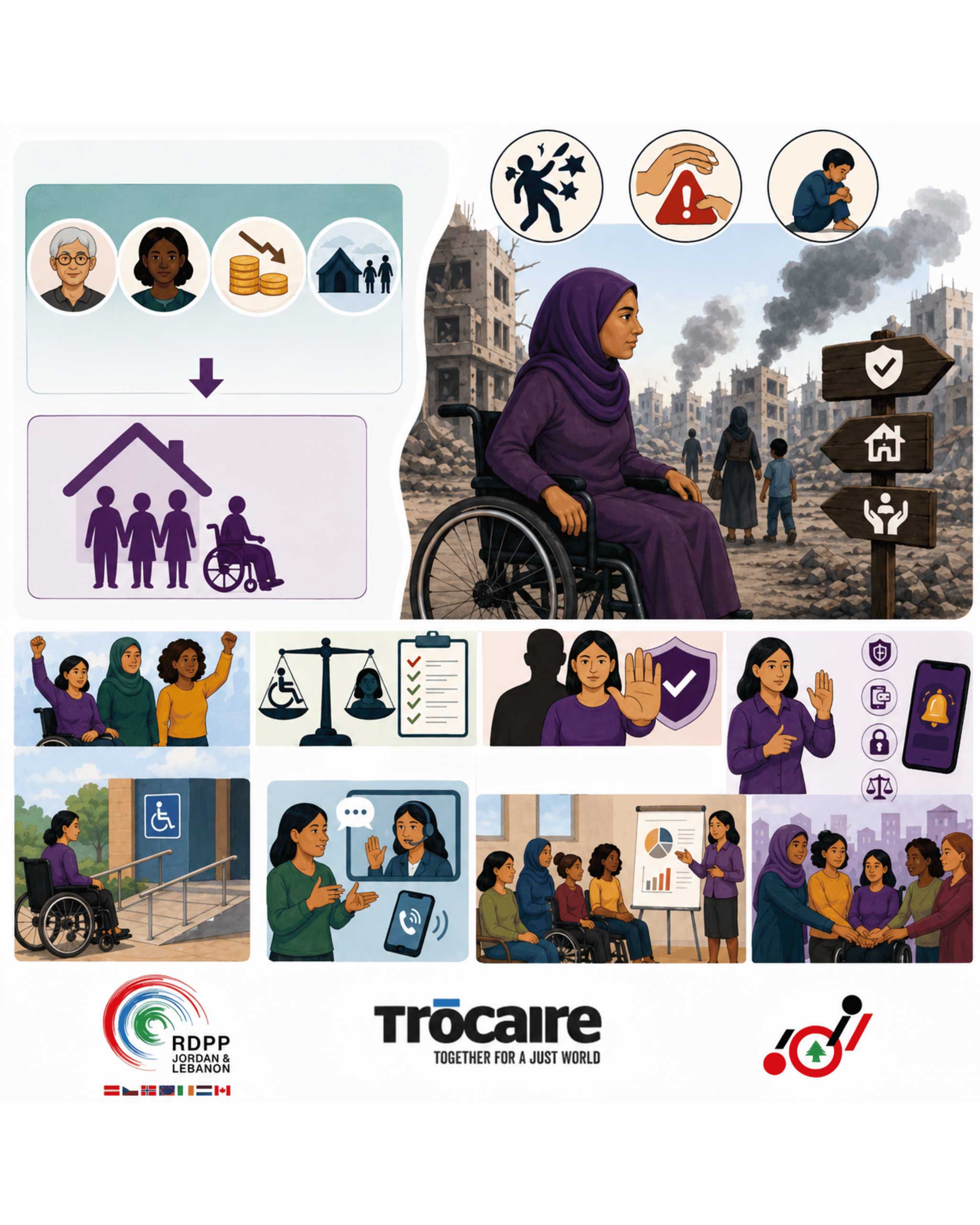
Women and girls with disabilities face a unique and often overlooked form of marginalization due to the intersection of disability and gender, further compounded by other forms of discrimination like ageism, racism, socioeconomic disparities, and displacement. This intersectionality significantly increases their risk of gender-based violence (GBV), both at home and in the community as recognized by the UN Convention of the Rights of Persons with Disabilities (UNCRPD). During emergencies, this vulnerability is exacerbated, leading to heightened risks of violence, exploitation, and neglect due to barriers in accessing essential services, protection mechanisms, and reporting avenues. These barriers are often related to accessibility, communication, inclusion in decision-making, problem-solving, and independent living.
The escalation of violence in September 2024, which forced persons with disabilities to choose between essential assistive devices and evacuation, underscores their vulnerability and the urgent need for inclusive emergency response planning. This situation demands a focus on improving access to reporting mechanisms, enhancing protection from GBV and exploitation, developing inclusive policies and practices, and promoting empowerment and participation for women and girls with disabilities.
LUPD’s goal is to ensure that women with disabilities have equal access to protection services, resources, and opportunities to report violence and discrimination. The focus of this position paper is on:
- Access to Reporting Mechanisms
- Protection from GBV and Exploitation
- Inclusive Policies and Practices
- Empowerment and Participation for women and girls with disabilities
Table of Contents
- Context
- Barriers and Challenges to access reporting mechanism:
- Limited Awareness and Access
- Societal Stigma and Discrimination
- Fear of Retaliation and Mistrust
- Lack of Specialized Support Services
- Recommendations
- For the Ministry of Social Affairs
- For donors
- For Organizations of persons with disabilities (OPDs)
- Conclusion