“Improving access to rights and self-reliance of affected host and refugee communities in Lebanon through strengthening locally led interventions“
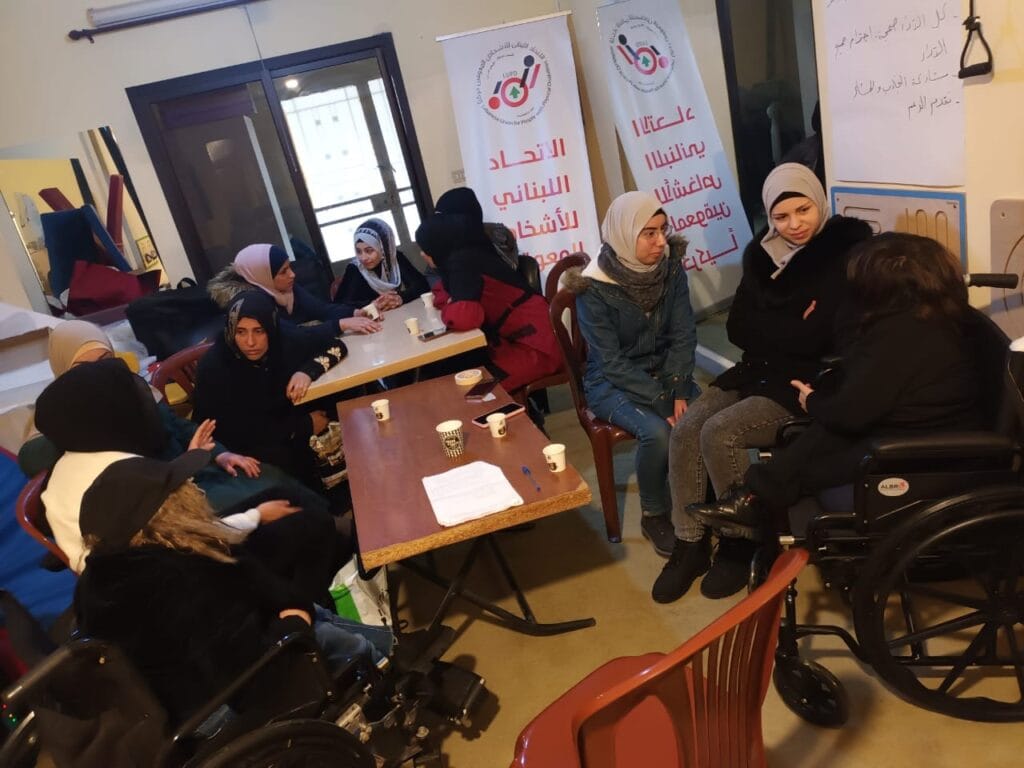
This vital project, funded by the Regional Development and Protection Programme in Jordan and Lebanon (RDPP III) under the umbrella of the Danish Embassy in Beirut and in partnership with Trócaire, is implemented in the areas of Beirut, Mount Lebanon, and Baalbek, and runs from April 2024 to December 2026. The project is built on three main pillars to empower the most vulnerable groups, particularly women and girls among refugees and host communities, with a special focus on women with disabilities.
Main Objectives and Achievements
- Empowerment (Pillar 1): Under this program, women are empowered to become able to claim their rights and influence decisions that affect their lives. Through the intensive “Masidama” approach, which aims to analyze power dynamics and build support networks, 212 women (specifically women with disabilities) have been targeted to date. This empowerment has resulted in the development of 3 community-led initiatives by the participants, including the production of a video highlighting the voices of women with disabilities, as well as advocacy efforts with the Ministry of Interior and the Internal Security Forces regarding protection from gender-based violence and discrimination.
- Advocacy and Policy Influence (Pillar 2): The project aims to make institutional policies and practices (governmental and non-governmental) more responsive to the needs, rights, and dignity of vulnerable women. In this context, a research paper has been prepared on the challenges faced by women and girls with disabilities in accessing national reporting mechanisms, along with a position paper on gender-based violence during wartime. These have formed the basis for launching a large-scale advocacy campaign that will be completed during 2026.
The project recognizes the importance of engaging men as allies to challenge unequal social norms, thereby ensuring a comprehensive and integrated approach to achieving gender equality and women’s empowerment. To date, 38 men have been targeted within the intervention pathway.