
A young man who is both blind and mobility impaired, living in the southern suburbs of Beirut, complained to the Disability Rights Observatory. He says: “The government hospital refused to receive me, and they transferred me from one hospital to another, because they did not recognize my disability card. This has been repeated more than once, with no arguments. They simply don’t recognize the disability card.” Another young man from Qab Elias, 17, from the Bekaa Valley, said: “The hospital refused to admit me for surgery. They demanded that the minister of social affairs come to perform the operation.” In neighboring Baralias, a disabled girl recounts that she was admitted “in an emergency to a private hospital. They asked for financial coverage and did not recognize the disability card. They said the card is not a document that covers health costs.” The same complaint was repeated in the southern town of Jabshit and in the Shufiya town of Baqlin.
The health file for people with disabilities is perhaps the most pressing issue for a group of citizens that exceeds ten percent of Lebanon’s population, according to civic statistics more than ten percent of Lebanon’s population, according to civic statistics. The right of a person to comprehensive health coverage in accordance with Law 220/2000 is pending until the actual implementation of the law. But complaints that were once scattered now have an address to send them to. They are as numerous as the articles of the law, from the disabled person’s right to a qualified environment, to their right to transportation, parking and market licenses market, housing, education and sports, all the way to the right to decent work, employment and social benefits. and social benefits. The title is the Disability Rights Observatory, which was launched this spring, and today launches its first report from Beirut.
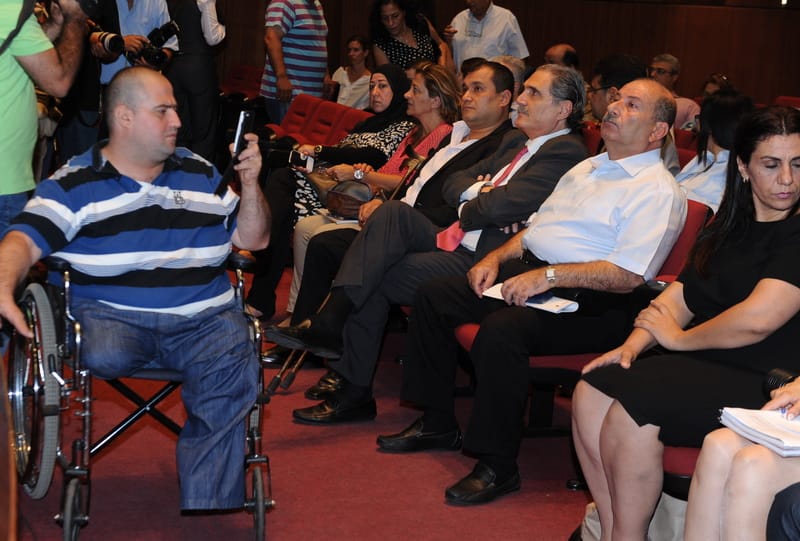
A meeting on August 14, 2013 at the Lawyer’s House, bringing together representatives of civil society human rights associations, associations of persons with disabilities, and disability-related associations and institutions, on the one hand, and the caretaker ministers of social affairs and labor, directors general and representatives of ministries concerned with law enforcement, on the other hand. The launch of the Disability Rights Observatory’s first report, “The Good Intentions of State Administrations Are Not Enough,” is another opportunity. The launch of the first report of the Observatory for the Rights of Persons with Disabilities, titled “The Good Intentions of State Administrations Are Not Enough,” is another opportunity for stakeholders to come together to seek a partnership to implement the law and ratify the International Convention on the Rights of Persons with Disabilities (2006) to achieve a diverse society that respects all of its citizens.