
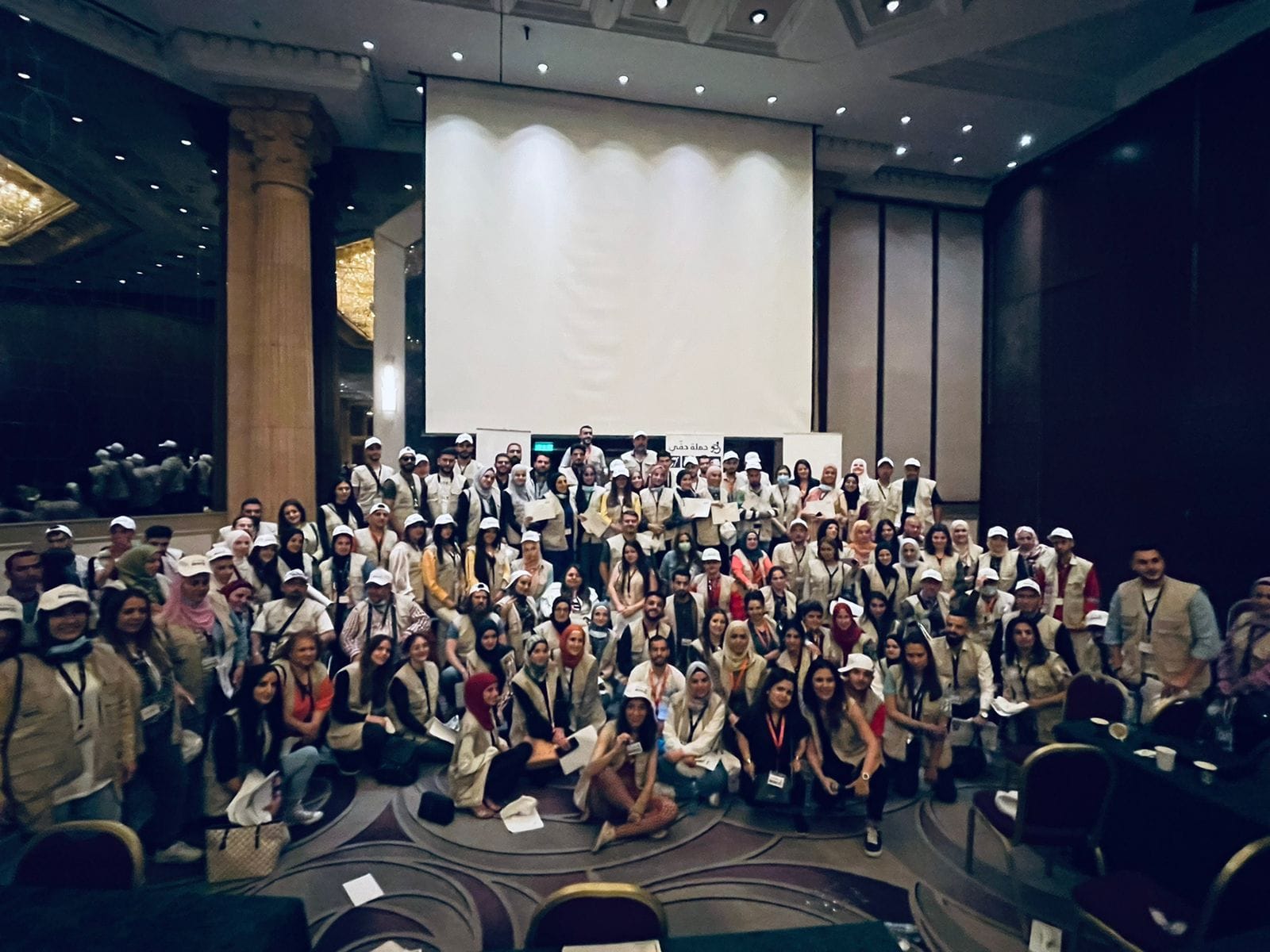
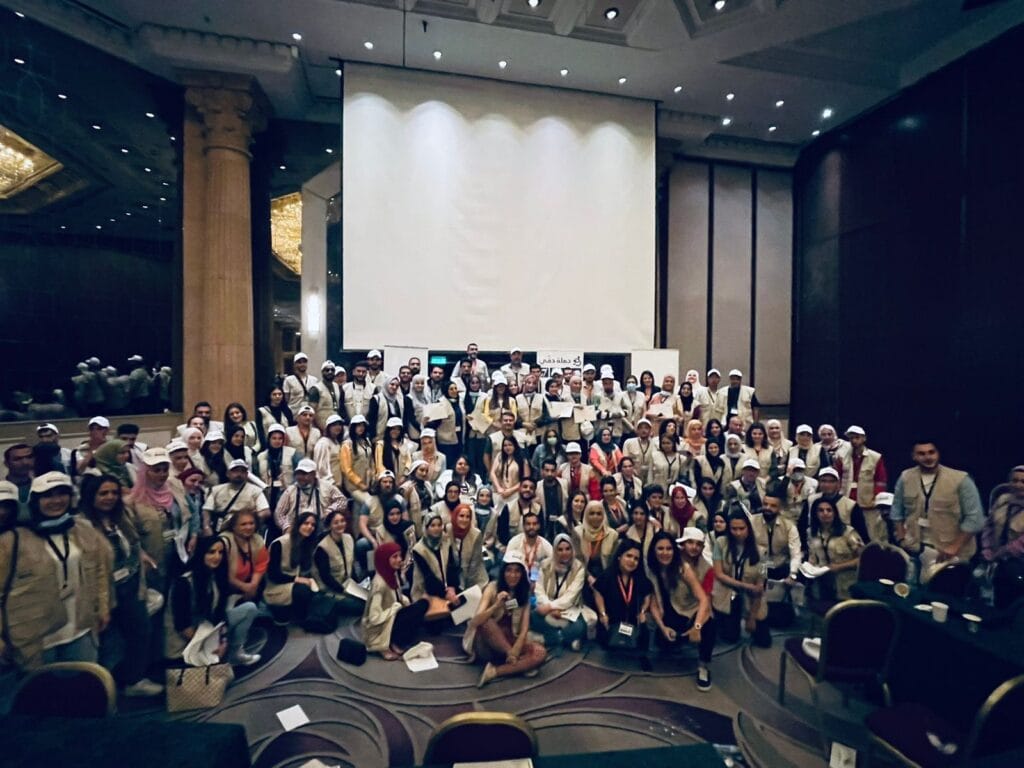
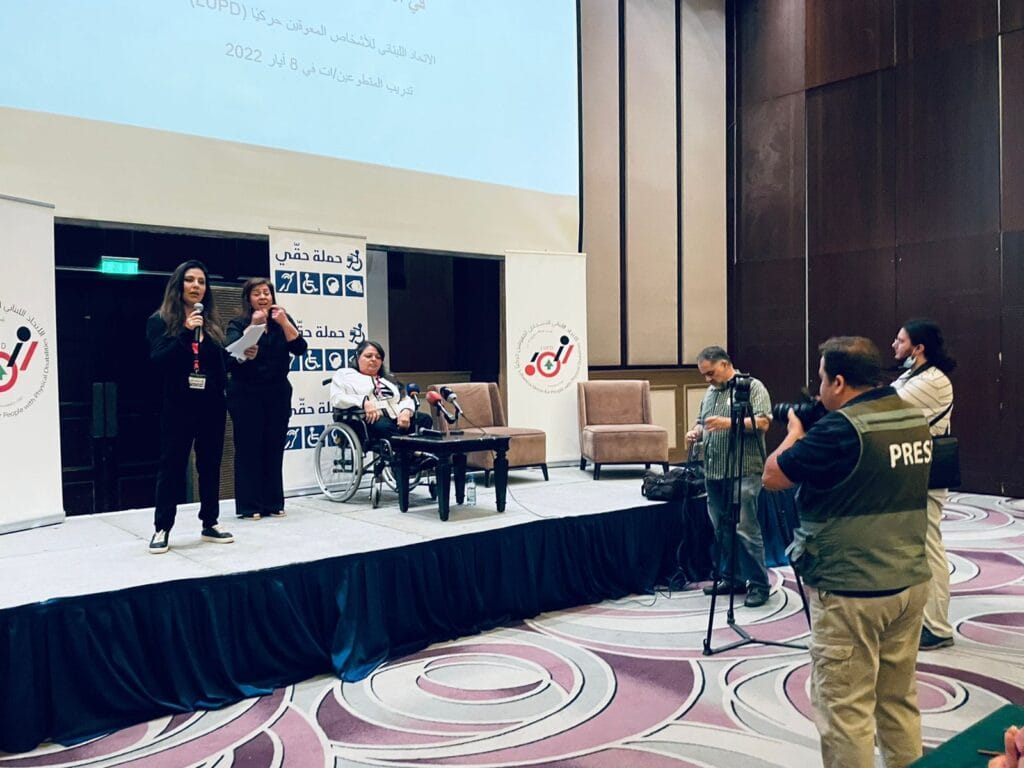
The LUPD launched My Right – the national campaign for the realization of political rights for persons with disabilities in Lebanon, in its ninth edition, at a press conference in Beirut, in the presence and participation of representatives of the European Union Delegation, international election monitoring bodies, and the campaign’s 215 local observers.
After the Lebanese national anthem, the president of the LUPD, Sylvana Lakkis, delivered the campaign’s speech, in which she recalled:
The campaign was launched in 2005 to urge the implementation of Article 98 of Law 220/2000 to preserve the right of persons with disabilities to run and vote in elections, and was able to include a legal article in the draft of President Fouad Boutros’ committee for the draft electoral law, then the Lebanese legislator fixed the content of this article in Law 25/2008 and the current electoral law 47/2017.
In cooperation with the Ministry of Interior and Municipalities, she was able to work on the issuance of Implementation Decree 2214/2009 to facilitate the voting process for disabled voters. This is at the legal level.
At the level of studies, the LUPD worked on monitoring electoral centers and surveying the extent of their readiness for disabled voters to complete an inclusive voting process. The comprehensive field survey of polling centers in Lebanon between 2008 and 2009, the audit in Beirut in 2015, the study of the cost of equipping all schools in Lebanon, both public and private, which showed that 0.8% of the budget of the Ministry of Education and Higher Education for six years is enough to equip all schools in Lebanon, and the detailed architectural studies and maps of schools that were submitted to the concerned ministries. The successive governments from 2005 until today did not take any of them into consideration.
On the My Right 2022 campaign, she said:
The campaign kicks off today with more than two hundred volunteers to observe after we lowered our expectations and limited the many demands to what we call the minimum rights of disabled voters. We summarized them with the following demands: The use of ground floor rooms in polling stations as polling stations where they exist, and we provided the Ministry of Interior and Municipalities with a list of these centers issued by the LUPD’s architectural unit, the operation of elevators in polling stations where they exist, and the creation of polling stations in centers where there are no rooms on the ground floors.
Lakkis noted that the campaign saw:
Serious initial cooperation from the Ministry of Interior and Municipality with our three demands, which would eliminate the humiliating spectacle of carrying disabled and elderly people on stairs as in every past election. The ministry adopted the sent list and was able to modify the locations of some polling centers that do not have rooms on their ground floors. We saw initial cooperation from the Ministry of Education and Higher Education through the minister’s circular regarding the opening of ground floor rooms where they exist, and that the principal and custodian of each school will be present on election day.
She continued:
We did not receive any cooperation from the Ministry of Social Affairs, which withheld the data of people with disabilities from the Ministry of Interior, and the lists it handed over could not be used to know the place of registration of a disabled voter so that the governors could instruct the establishment of polling stations for disabled voters who hold a disability card issued by the Ministry of Affairs in their polling places. It is important to note here that we have received a positive response from the governors, as through our efforts, we were able to provide them with lists of the Union’s members and volunteers, so polling stations were set up in some districts and we have received initial reassuring news from them. If the Ministry of Affairs had handed over the lists identifying the voting districts of registered disabled voters, they might have been able to vote independently next Sunday. Here, we ask the Prime Minister why the Ministry of Affairs is withholding this data and not providing it to the Interior Ministry.
She urged disabled voters to exercise their electoral right by casting their votes for any of the candidates they wish, stressing that:
The My Right campaign is across regions, sects, parliamentary blocs and all candidates, and does not encourage voting for any specific list, but urges the disabled voter to exercise his right, in the hope that he will reach a day when he exercises this right with full independence without compromising his human dignity.
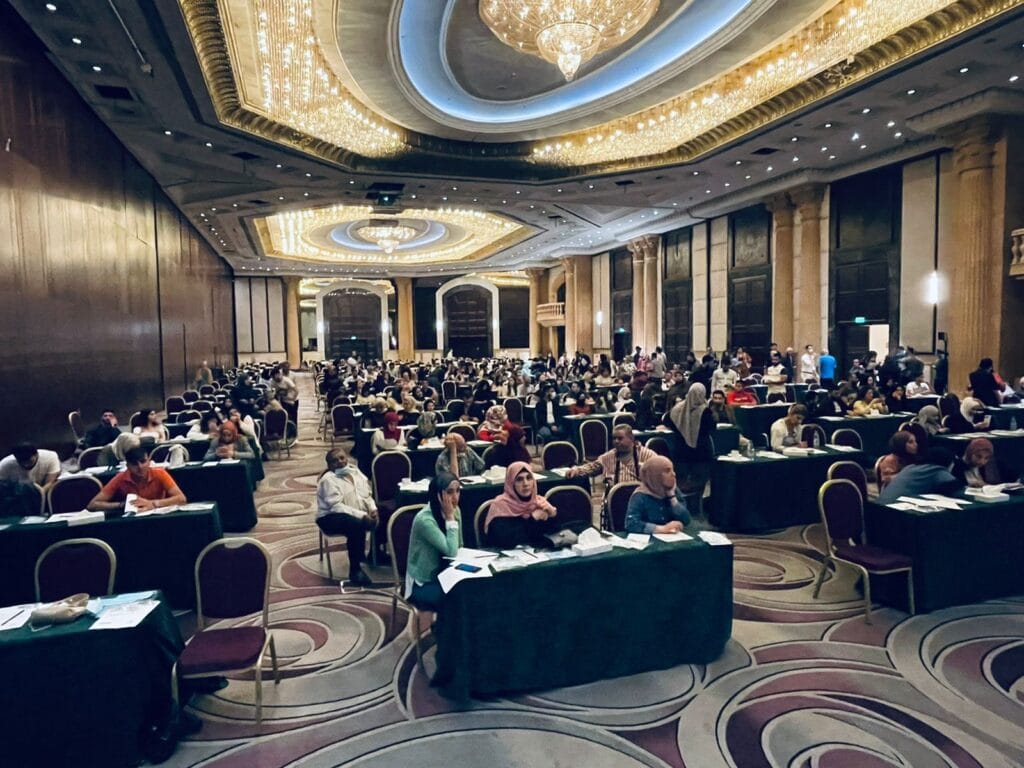
At the launch ceremony, the LUPD’s Executive Director of Programs, Hanine Chemali, presented the details of the monitoring work that will take place next Sunday, and the distribution of fixed and mobile campaign teams to the electoral districts. The long day included intensive training for observers that culminated the regional training workshops they underwent over the past two months.