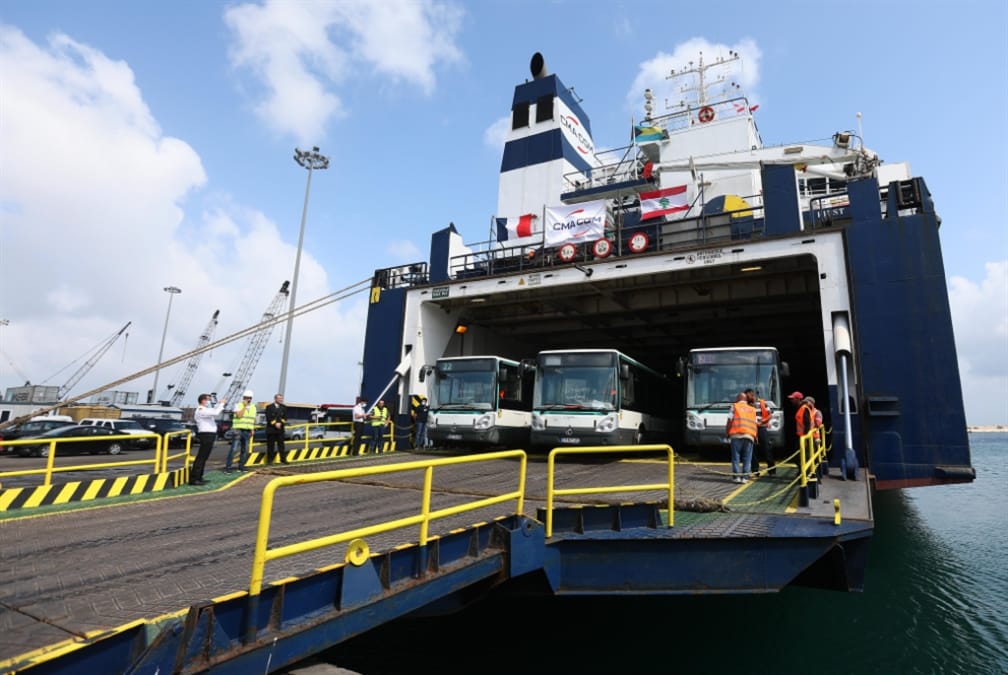
As soon as the French bus donation to the Lebanese government arrived in May 2022, a specialized team from the Lebanese Union for Persons with Disabilities inspected the arriving buses to document their readiness for use by disabled passengers. The inspection showed that the buses include equipment that facilitates the use of crutches and wheelchairs, in addition to other equipment for deaf and blind people.
The Minister of Public Works and Transport preceded the arrival of the buses with a statement saying that “France will provide Lebanon with successive numbers of buses, the first of which is 50 buses, and this donation is part of the integrated transportation plan throughout the Lebanese territory.” That statement tickled the fancy of more than 15 percent of the Lebanese, as people with disabilities have waited and demanded this inclusive shared transportation plan for decades. But what has happened in the past 15 months?
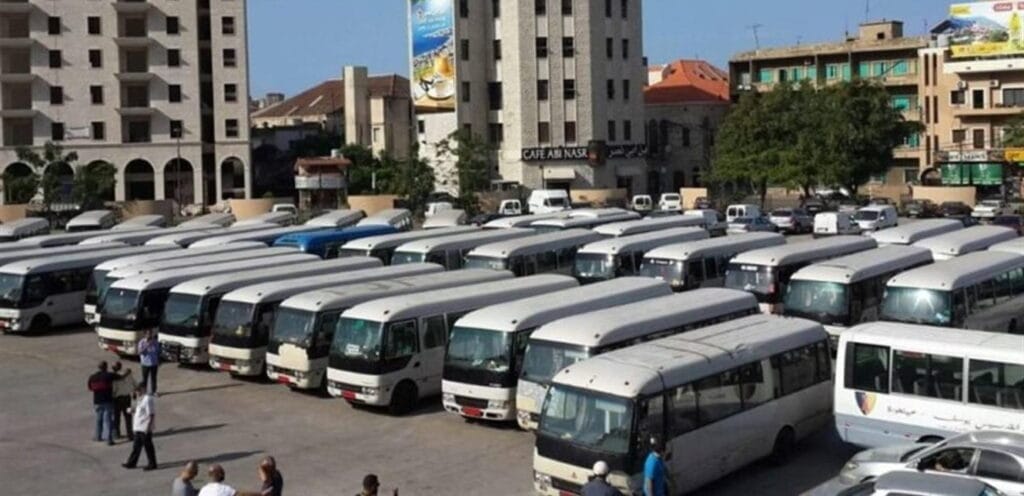
These 50 buses were supposed to be added to the 45 others owned by the Railway and Combined Transportation Authority. A plan was prepared to operate these buses in Greater Beirut and between Beirut, the North and the South, in partnership with the private sector. However, it was debated for about five months whether these buses were subject to customs duties and value-added tax, or whether the donation was supposed to be exempt… Then it turned out that they were exempt, and another debate began, as it turned out that registering the buses required mandatory insurance that the Railway Authority could not cover, so another donation of fifty mandatory insurance policies was requested. However, the buses that were insured were not registered because the “useful” registration authority was closed due to a staff strike and corruption cases. After they were registered through communication between the ministers of transportation and interior, it turned out that the Ministry of Public Works and Transportation has no capacity to operate these buses at all. The argument this time is that it has no drivers and hiring in the public sector is forbidden. The magical solution, as always, was to turn to the private sector to provide drivers and operate the buses. But the private sector did not respond to two tenders launched by the ministry. The private sector did not respond to two tenders launched by the ministry.
The story in a nutshell if we follow the words of Minister of Public Works and Transport Ali Hamia and the Director General of the Railways and Common Transport Authority Ziad Nasr (until August 2023): Cajoling, accepting a grant, then procrastinating, stalling, and declaring a deficit. The only thing the French grant has provided over the past fifteen months has been frequent media appearances by the two men, which have consisted of a lot of noise without flour.
Today, there are calls for handing over these buses to municipalities to operate them in their own way, or handing them over completely to the private sector, among other things. However, what the Lebanese Union for Persons with Disabilities fears is that whoever operates the buses will remove the engineering equipment that makes it easier for disabled passengers to use them. Disabled activists have their reasons for expressing their fears, as they have a bitter experience with the shared transportation buses that the Lebanese government received in the early 1990s equipped for people with disabilities, but the equipment disappeared, and the ministry was no longer heard from.
Unfortunately, the “integrated transportation plan for the entire Lebanese territory” promised by the minister, and others before him, did not even turn into ink on paper, but remained a long-term dream for people with disabilities, the elderly, pregnant women, parents transporting their children with strollers, and people with temporary disabilities.